The people of Great Britain are today willingly locking themselves up and throwing away the keys as they mark the death of Magna Carta, which passed away this week after being set upon in the Houses of Parliament.
Magna Carta, the eight-hundred-year-old document in which were enshrined some of the fundamental liberties of the people(1), was born in 1215, after the brooding, treacherous and incompetent King John got drunk on power one night and was accosted by a large group of rebellious barons whilst on his way to meddle with the forest law, increase scutage(2) and have one of those kebab things the crusaders kept banging on about. It was when the King awoke the following morning in a damp field in Surrey that he discovered that not only had he given birth to one of the earliest examples of constitutional law and sewn the tiny seed from which democracy might one day flower, he had also lost most of his power and inadvertently given Englishmen the right to equality under the law and not to be locked up without trial.
Given the circumstances of its birth, it is unsurprising that Magna Carta proved to be an unloved child. No sooner had it been born than its father attempted to disown it, even getting the Pope to annul large parts of it as "shameful and demeaning" and forced on the King by "violence and fear"(3). Yet despite this, Magna Carta refused to go unnoticed. Thanks to its provisions, for the first time a council was set up to represent the people of England (or at least as many of them as happened to be rich and powerful and have a significant body of knights to back them up) rather than merely to serve the King. It was Magna Carta that first granted the right to be tried by one's peers and insisted fines should be proportionate to the offence, as well as decreeing that only competent people should be appointed to ruling posts (a provision which sadly does not extend to the roles of England Football Manager, Heathrow baggage handler or successful candidate on The Apprentice).
As time passed, the popularity of Magna Carta was to grow. By the reign of Elizabeth I it was being hailed as the embodiment of ancient English liberties, by the time of her Stuart successors as an indispensable limitation upon the powers of the Crown and it was under Magna Carta's banner that Parliament was to seize power from Charles I. Indeed, so useful was it in overthrowing the country's leader that, upon becoming that leader himself, Oliver Cromwell immediately started slagging it off to anyone who would listen, memorably describing it as "Magna Farta".
Despite such attacks, Magna Carta fought on, travelling alongside the common law to all parts of the British Empire and influencing the laws of countries from America to Zambia and encouraging our Georgian and Victorian ancestors to proclaim the superiority and nobility of the British system, even as they sold people into slavery, nicked their land and exported assorted criminals to Australia, where their descendants would one day be responsible for giving us Neighbours and Home and Away in return.
Throughout the 20th Century (aside from a brief funny turn in the 1970s when the British Government decided to help the IRA recruitment drive by locking up without trial anyone in Belfast who pronounced "H" as "haitch" on suspicion of being a terrorist) Magna Carta was hailed as a hero. Yet heroes are not always universally popular(4). By the early Noughties, politicians in such enlightened countries as America, Britain and Zimbabwe found themselves publicly questioning Magna Carta's role. The aged document was said to be looking dowdy and old-fashioned, ill-fitted to a modern world where Presidents and Prime Ministers might need to lock people up in order to defeat terrorism/steal elections and/or look really tough in the pages of the tabloids and the bulletins of Fox News.
In America, Magna Carta found itself hooded, locked up and "questioned" without trial for giving succour to terrorists. In Zimbabwe it was quietly shot for giving succour to people who weren't Robert Mugabe. In the UK it staggered on, forced year by year to turn an ever more scarred cheek as its provisions were slowly whittled away by those whose job it was to defend it.
Just as it was born, so Magna Carta was to die. On 11 June 2008 an incompetent and much-disliked leader was to find himself locked in a room with a group of privileged people of negotiable morality eager to extract any concessions they could. Mere hours later, the body of Magna Carta was found bruised and bleeding its last on the floor of the House of Commons.
Magna Carta will be buried under several promises of knighthoods, the odd multi-million pound bribe, an "Ulster Says No" badge and a populace ever more eager to see their last freedoms destroyed in the name of an unwinnable and illogical "war on terror". It is survived - somewhat surprisingly - by former Shadow Home Secretary David Davis.
(1) as well as not-so fundamental rights relating to the ability of widows to inherit fiefdoms, the duties of towns to build bridges and the like, and a complete ban on any member of the D'Athée family being made a royal official.
(2) a medieval tax, relating either to the right of a knight to buy himself out of feudal service or, possibly, to the use of obscure and long-disused words whilst playing Scrabulous on facebook.
(3) By strange coincidence, these are the same reasons given by many people for wanting to expunge all memory of their renditions of "Uptown Girl" at "the karaoke last night".
(4) As anyone who has ever played a licensed computer game tied-in to the release of the latest superhero blockbuster can affirm.
12 June 2008
| [+/-] |
Magna Carta 1215-2008 |
26 November 2007
| [+/-] |
The New Labour Brown, June 2007-November 2007 |
 Many psephologists, politicians and policy wonks are today declaring that Gordon Brown's government - once hailed (chiefly by Polly Toynbee, Jackie Ashley and, weirdly, the leader writers of the Daily Mail) as the bright, new hope of British politics - has died.
News of the death came this weekend when pollsters, kitted out in brown plastic macs, marched into the media bearing the remains of the lifeless creature in a gilded cage, bellowing that they wished to register a complaint about the government that they had not been allowed to vote for, "not five months ago".
Those concerned about the leadership of the country will be happy to learn that these claims were met by Lord Chancellor and Justice Minister Jack Straw, who repeatedly stated that the government, or New Labour Brown, was not dead but "merely resting" and noting its beautiful plumage. In an effort to persuade the pollsters and, indeed, the public not to return the New Labour Brown, Mr Straw then went on to insist that any signs of political death it may have shown - the first run on a bank in over a century, the loss of 25 million people's data, the employment of illegal immigrants in security jobs, a 700,000 slip in employment statistics, and the development of severe cataracts in Gordon Brown's political vision, not to mention the fact that The Brown's political birth was marked by the arrival of at least three of the four horsemen of the apocalypse - the Brown was simply pining for the votes. Mr Straw then went on to demonstrate the beast's lively state ... by repeatedly hitting its cage to get it to move.
Mr Straw went on to point out that The Brown has not yet fully emulated its predecessor - the Major Blue - whose signs of death included losing £27 billion on propping up the pound (rather than a bank) and assorted allegations of money being delivered to MPs in brown envelopes (rather than money being delivered to the party in false names).
Despite Mr Straw's protestations, pollsters continue to insist that the New Labour Brown only continues to stand up because it is nailed to its perch and that it is, in truth, dead, deceased, an ex-government and has kicked the bucket, shuffled off this mortal coil and gone to join the choir invisible.
The New Labour Brown will be buried at St Monty's Church of the Apposite Metaphor. It will be mourned by all those who took assurances of spin-free and competent government at face value. It is survived by a lame duck.
07 November 2007
| [+/-] |
Gordon Brown's Political Vision mid-1950s - 2007 |
 The death of Gordon Brown's Political Vision has come as a grave shock to all those who knew it and as a particular cause of grief to those members of the Labour Party who once held it up as a beacon of hope in a world of political ennui.
It would be impossible to recount the stirring tales that have been told of the Political Vision, many of them by the Prime Minister himself. It was a vast and noble thing, encompassing everything from the fate of the planet, nay the universe itself, all the way down to the tears of a single child born in poverty and even taking in the complex machinery of post neo-classical endogenous growth theory on the way. Thanks to its prodigious strength and mighty intellectual force, those who walked beside it - or perhaps it were better to say, "those who walked in its shadow" - could do so without fear that any harm might come to them.
The Political Vision was born on the knee of Mr Brown's own father, the Church of Scotland minister Dr John Brown, who lectured his son even as he dandled him in his hands, reminding the wee Gordon of his duty to his fellow man, to remember that many a muckle makes a mickle and - as the Prime Minister himself recalled - "to treat everyone equally" (whether Dr Brown added that "everyone" did not include either young Muslims suspected of terrorism or the super-rich is sadly unknown).
Throughout his time at university, and on into his early life in politics, Gordon was to cleave to his Political Vision. He was often seen parading it in public, whether as editor of The Red Paper on Scotland or as a rising young star of the Labour Shadow Cabinet of the 1980s and early 1990s. Gordon Brown's Political Vision took in all it surveyed: it was for fairness to all, hard work and duty, it stood for the poor against the rich and the downtrodden against the privileged.
It was in 1994 that the Political Vision was to suffer the tragic accident that would affect it for the rest of its life, running into the sharp end of Tony Blair's butter knife in the dim lighting of a fashionable North London restaurant. This accident, it would appear, left the Political Vision so hideously scarred that it fled the political stage, leaving it to the rival - we are assured inferior - vision of the young Tony Blair.
For years, Gordon Brown's Political Vision haunted the Labour Party - only bursting from the shadows at Budget time or during the party conference season, when its shocking appearance served both to remind the Labour party of the glories it had once been promised and to send a shiver down the spine of Mr Blair. Indeed, it was only with Mr Blair's own political death - tragically crushed under a large political machine that had somehow worked itself loose - that Mr Brown, and his Political Vision - emerged once more.
The years of isolation had clearly taken their toll. The Political Vision - so long masked from view - turned out to be a pale and paltry thing, little different from the vision of Mr Blair or - indeed - Tory leader David Cameron. As it stepped fully into the light with its first Queen's Speech, Gordon Brown's Political Vision crumbled into a ragbag of bills to detain people without trial, build on green belt and a bit of fiddling round the edges with school leaving ages, waste disposal charges and parental leave, all wholly ununited by any overarching theme.
Gordon Brown's Political Vision will be scattered by a light breeze. Mourners are asked to send donations to offshore tax havens.
08 October 2007
| [+/-] |
The Prospect of an Early General Election 27 June 2007 - 7 October 2007 |
 Friends of Gordon Brown were today weeping into their glasses of puritanical water and Conservatives laughing into their jubilant champagne following news of the death of The Prospect of an Early General Election, which slipped under the psephological waters over the weekend with the Prime Minister's confirmation that he will not be seeking a mandate(1) from the electorate until 2009 at the earliest.
Despite having been born so recently and having spent so much of its time in the eye of the media, the parentage of The Prospect remains uncertain to this day. Those close to the Prime Minister insist that it was the child of a series of drunken liaisons between political journalists eager for a story and a few overenthusiastic Labour MPs intoxicated by Mr Brown's enormous success in looking dour but responsible while plague, pestilence, famine and death chose the first hundred days of his premiership to visit the country. The dark mutterings of others(2), however, would suggest that The Prospect was actually the child of Mr Brown himself, born on the wrong side of the bedsheets after Mr Brown's attempts to screw the Conservative party and get his own supporters to toe the line by making a General Election seem - like an object in the wing mirror - to be much closer than it really was.
Whatever the truth of its origins, The Prospect certainly grew quickly. With political correspondents tired of their stories only appearing as the third item on the news bulletins, below shark sightings off the British coast or the latest prurient and unfounded speculation about a child abduction, it was soon being touted around as the great hope of political journalism. Before long it was impossible to turn on a news programme without having to face a twenty minute dissection of The Prospect's prospects. Soon discussion of The Prospect was drowning out all other news (save in The Express which continued to deal at length with the most important news of the day, though the day in question was usually 31 August 1997).
Though once closely associated with Mr Brown, The Prospect now seemed to be electrifying everyone. At the LibDem party conference Sir Menzies Campbell became so excited he was seen by at least one witness to twitch his left eye briefly before slipping back into his habitual coma. At the Conservative conference, young Dave "David" Cameron was moved to bounce around on stage calling for Mr Brown to "bring it on" - causing alarm to local hoteliers and restaurateurs who remembered that, in his Bullingdon Club days, such a phrase was normally the preface to thousands of pounds worth of damage being done to a local hostelry or eating establishment.
Mr Brown, meanwhile, found himself increasingly enamoured of The Prospect. Impressed by the attention granted to it by the media and assured of his own performance after an injection of good polling returns, he sought to woo the Prospect - bringing forward announcements he had promised would be made to Parliament, demanding that TV stations prepare for a major statement to be made and (in no way cynically) attempting to upstage Mr Cameron by (in no way cynically) rushing off to Iraq to double count (in no way cynically) the troop reductions he was planning there. The Prime Minister's amour fou for what many believed to be his own child was now obvious to all.
Such a liaison - straight out of the worst 19th Century melodrama as it was - was, of course, doomed. No sooner had the Prime Minister's enormous desire for an early election become clear than The Prospect itself was set upon by Shadow Chancellor George Osborne with a loaded Inheritance Tax cut. Severely wounded by the Tories' plan to enable feckless children to inherit up to a million pounds tax-free from their hard-working parents, The Prospect became a mere shade of its former self. Where once it had been attractive to all, now it was an embarrassing, shambling figure, capable only of inspiring pity. Thus it was that, horrified by what had happened to his former love, Mr Brown chose to steal out of Downing Street at the weekend and drown The Prospect under a sea of unfavourable opinion polls.
The Prospect of an Early General Election will be buried at the Church of St Bob Mckenzie of the Broken Swingometer. Conservatives, LibDems and Labour MPs in southern marginal seats will celebrate loudly into the night, while Mr Brown himself will stand silently at the graveside, a much-diminished man.
(1) younger readers are advised that "mandate" here means the commission as to policy granted by electors to their elected representatives and is in no way a suggestion that the Prime Minister was looking for a romantic liaison with a member of the male gender.
(2) not to mention "the facts".
05 October 2007
| [+/-] |
Political Speechwriters ????-2007 |
 The death of Political Speechwriters is today being reported in blogs, in newspapers and on the television - but not in any political speeches - following the barnstorming, "unscripted" performance by Conservative leader David Cameron at the end of his party conference.
There have long been disagreements between the experts over the dating of the birth of the first Political Speechwriter. Some have suggested that speechwriting goes back to the very dawn of humanity itself, with Ug the Chieftain's brilliant "Ug smash!" oration(1) actually being written by Ug the Speechwriter - though the fact that Ug the Speechwriter could not, in fact, write anything at all and usually contented himself with trying to rub two rocks together in a futile attempt to create fire admittedly militates against this theory.
Others claim the Political Speechwriter was born during the Roman Republic, suggesting that Julius Caesar could not have "come, seen and conquered" without considerable help from his favourite Greek slave - though whether this theory refers to Caesar's famous "Veni, vedi, vici" report to the Senate following his battle with Pharnaces at Zela or merely to the Roman leader's activities at a particularly eventful orgy is still disputed.
There have, of course, been suggestions that the first Political Speechwriter was born during the time of the Tudors. Many believe that Queen Elizabeth I's announcement that she had "the body of a weak and feeble woman(2); but ... the heart of a king, and of a king of England too" was in truth ghost-written by William Shakespeare ... though given that many believe that Shakespeare himself was ghosted by Francis Bacon, Christopher Marlowe, William Stanley, 6th Earl of Derby, Edward de Vere and/or Dr Who mean this theory advances debate very little.
What is certainly true is that even by the middle of the 20th century, many politicians still felt it incumbent on them to write their own speeches. Any doubts as to Churchill having dictated his most famous speeches to his secretary were recently allayed by the discovery of the first draft of his first speech to the Commons as Prime Minister, which reads "I have nothing to offer but blood, toil, tears and ... oh bloody Hell! I've knocked over the Johnnie Walker".
By the Presidency of John F Kennedy however, the Political Speechwriter had come to the fore. Without the work of his Special Counsel and Adviser, Ted Sorenson, the President would never have asked the Americans to "Ask not what your country can do for you (3), ask what you can do for your country(4)" or informed the people of Berlin that he was a doughnut(5).
Soon Political Speechwriters were informing us that Margaret Thatcher was "not for turning", Ronald Reagan wanted us to "win one for the Gipper" and John Major wanted to "get back to basics" (such as losing elections). At the same time the dangers of not employing a Speechwriter were also being made clear, not least in the notorious speech by former Labour leader Neil Kinnock, which reached its second day before it closed its first sentence(7). So it was that the Speechwriter came to dominate the political scene. Brilliant words and phrases were focus-grouped and honed before being permitted to issue forth from the lips of great communicators such as Bill Clinton and Tony Blair. Verbs were abandoned, "people's Princesses" were born. All seemed to augur well for the Speechwriters.
And yet, and yet. Some time in the noughties, people across the globe began to tire of the slick and well-honed phrase and began to question the sincerity of those who delivered them. Matters came to a head in Britain in September 2007, when - during his scripted speech to his party conference - Prime Minister Gordon Brown seemed to have been taken over by dark forces, calling for "British jobs for British workers" and the instant deportiation of "newcomers" who "sell drugs to our children or use guns" ... though, fortunately, he managed to stop himself before mentioning that, "like the Roman, I seem to see 'the River Tiber foaming with much blood'".
Political Speechwriters might perhaps have limped on even after this debacle, had it not been for the arrival of that knight in shining armour, David Cameron, who sought at one stroke to do away with political spin and deception by delivering his speech to the 2007 Conservative Conference unscripted and aided only by a few notes and an arcane process known only as "learning by heart" - a process which enables any politician to bestride the political stage like a colossus, exhibiting unspun sincerity and deep engagement with the issues of concern to the British people even as they dole out the same bland platitudes, feel-good-phrases and dog-whistle buzzwords that they have studiously workshopped with their presentation teams for the past three weeks.
With the country enraptured by Mr Cameron's performance and the new "learning by heart" process becoming all the rage, there was no more room for Political Speechwriters. They passed away, unloved and unmourned, with not even a single memorable phrase to mark their departure.
Political Speechwriters will be buried at the Church of St Soapbox on the Speakers' Corner. The funeral oration will be entirely spontaneous and unrehearsed, which is to say ill-thought-through and rambling and the congregation will sing Hymn 117 A Little Bit of Politics (Music: Andrew Lloyd-Webber; Lyrics: Ben Elton).
Political Speechwriters are survived by a bounce for the Conservatives in the polls and a worried Gordon Brown.
(1) Later shamelessly plagiarised by The Incredible Hulk during a stump speech to a large number of tanks he was, er, smashing.
(2) believed to be Mary, Queen of Scots
(3) definitely not provide affordable medical care, for one thing.
(4) if you are poor, this will conventionally involve dying in a foreign country of which you know little.
(5) Ich bin ein Berliner(6)
(6) There is, of course, no truth in the myth that the phrase translated in context into "I am a doughnut" but, dammit, it's funny.
(7) Though cf. John Prescott, for whom Speechwriters did their best best but were sadly thwarted by Mr Prescott's insistence on trying to read out a minimum of three separate lines of his prepared text at the same time.
17 September 2007
| [+/-] |
Gordon's Secret Love 1979-2007 |
 We at As A Dodo regret that we must issue yet another of our frequent apologies, this time in respect of the following obituary for the secret love of Gordon Brown for Margaret Thatcher, which appears to have been drafted while our staff member was writing under the influence of Simon Bates.
I wanna talk to you about a guy called Gordon. Gordon was a guy from Scotland. He was a big guy. He was a political guy, a Labour guy. Back in the late 70s Gordon was also a lonely guy. Sure he had his mates in the Labour party, his pals in TV production, but Gordon knew there was something missing in his life. He knew he needed a special lady to love.
But then, in 1979, Maggie walked into his life. When Gordon caught sight of her on the TV, standing outside Downing Street proclaiming the words of St Francis's prayer, he was amazed. Maggie was bold, she was brave and - with the way the sunlight glinted off her helmet of blonde hair and the fires burned in the pupils of her steel-blue eyes - she was beautiful.
But Gordon had a problem. You see, Maggie wasn't popular with the Labour Party. She was the woman every Labour member loved to hate. Gordon knew that he could never speak a word of his love to anyone.
And so the long, painful years of Gordon's Secret Love began. He tried to snatch a glance of her whenever he could, running off into quiet corners to gaze adoringly at the telly as she crushed the unions, defended the Falklands, enriched the yuppies, raised unemployment rates and reduced the welfare state. He couldn't bear to be apart from her.
At last, in '83, Gordon found himself in Parliament, finally able to gaze upon his beloved across the floor of the House of Commons. Yet still he could say nothing. Still he had to pretend to hate the woman he loved so deeply. But at least Gordon now had a new friend, a friend I'll call Tony, to lean on. One night he confessed his Secret Love to Tony. Tony gave him a hug, told him to be brave, told him his secret was safe.
And that's when the biggest blow came. Next thing you know, Tony was doing the rounds of the TV studios and newspapers, telling everyone he could about Tony's deep love of Maggie. Soon Maggie was being seen around town with Tony, hanging on his every word and praising him to the skies. Gordon felt betrayed. He felt a fool.
Gordon tried to hide his hurt. He started wooing a girl called Prudence, journeying into a dark world of fiscal constraints and economic bondage. He also tried to hurt the one he loved. He said Maggie showed "a degree of malice in her conduct about the health service". He accused her of "far-right, far-fetched, far-out dogma". He tried to blame her for all of society's ills. But in his heart of hearts Gordon knew he still loved Maggie.
And then it happened. In 2007, Tony fell off a political cliff. Some say they saw a big Scottish guy called Gordon at the scene, but who knows. What we do know is that Gordon at last felt he could proclaim his love for Maggie to the whole world. Now Maggie was taking tea at Number 10 with Gordon and basking in the light of a thousand camera flashes beside him. Gordon's Secret Love was a secret no more.
And so, for Gordon, for Maggie, and in memory of Gordon's Secret Love I'd like to play you their tune ... Highway to Hell by AC/DC.
Gordon's Secret Love will be buried at the church of Our Iron Lady of the Photo Opportunity. The congregation will be accompanied by the sound of assorted deceased members of both the Labour and Conservative parties revolving in their graves.
10 September 2007
| [+/-] |
Gordon Brown's Honeymoon Period 2007-2007 |
 Gordon Brown’s Honeymoon Period – that glorious summer of sunny smiles and political harmony marked by a nation’s delirious acceptance of their new unelected Prime Minister(1) – has passed away.
It was in the balmy days of June 2007 that Gordon Brown and the British people were united in political matrimony, Gordon having offered a shoulder for the nation to cry on as it tried to recover from the discovery that former husband Tony Blair had been having a long and passionate affair with George W Bush ... as well as having offered the use of a double-barrelled shotgun with which to do away with its errant spouse (thus fulfilling Mr Blair's confident prediction to his friends that Gordon would only ever get together with the British people over his dead body).
So it was that on the joyous day of the nuptials, men, women and children across the country gathered together to celebrate the union between themselves and Gordon Brown in an outpouring of emotion on a level not seen since a secret cabal of florists(2) took out a contract on Diana, Princess of Wales to boost its profit margins.
At first all seemed well with the relationship. Mr Brown proved a dutiful - if unexciting - spouse, never happier than when plodding off to work to deal with inundation, foot and mouth, terrorist attacks or any other of the signs of impending apocalypse which had decided to pop by to wish him and the nation all the best in their new marriage. Yet beneath the surface all was not as it seemed. As the months went by the nation began to tire of Mr Brown's ceaseless dedication to his work, not to mention his constant calls for bans on gambling, reductions in drinking hours, the reclassification of cannabis and his secret meetings with spiritualists in order to channel the thoughts of The Daily Mail's Melanie Phillips. Soon the nation found itself looking elsewhere for a bit of fun and it began to think again of beginning an affair of its own with that well-scrubbed if rather vacant David Cameron chap who had popped round the other week to offer to install some solar panels on the roof.
Sensing a growing distance between himself and his spouse the Prime Minister decided to endear himself to the populace once more. Sadly he chose to do so by paying tribute to former prime minister Margaret Thatcher and slipping £120 to new mums to "buy something nice for the kiddies". It was not enough to close up the rift that had developed between Mr Brown and the nation that had once been willing to lie down and think of "Britishness" for him.
So as the nation sullenly ignored him over the toast at the breakfast table, Gordon Brown’s Honeymoon Period was over… I MEAN OVER! and a door slammed on the greatest political love-story since Alastair Campbell last caught sight of Tony in his Y-fronts.
Gordon Brown’s Honeymoon Period will be buried at the Trades Union Congress. The service will be conducted by the broadsheets, the tabloids and Newsnight (in an item dominated by quirky graphics, unsuitable music and a few images of Alan Yentob nodding intercut at random). It is survived by Gordon Brown’s Awkward Silences, Gordon Brown’s Moodiness and Gordon Brown’s Decision To Return Home To Live With His Mother For A Wee While.
(1) due mostly to their relief at being delivered – how ever undemocratically – from the yoke of Tony Blair.
(2) led, we are advised by our Egyptian correspondent, by the Duke of Edinburgh.
27 August 2007
| [+/-] |
John Prescott’s Parliamentary Career 1970-2007 |
 John Prescott’s Parliamentary Career – thought to have died last year under the enormous weight of personal scandal and political controversy – has been ended by the hand of John Prescott himself following his announcement that he is to step down as a Member for Parliament at the next general election in October, whenever that might be.
Though often considered an object of derision and frequently mocked for his lifelong struggle with the English language, it is little known that as well as being MP for Hull East, Prescott was also Deputy Leader of the Labour Party and Deputy Prime Minister, filling in for Tony Blair at the Despatch Box during Prime Minister's Questions, where his idiosyncratic performances were warmly greeted by the entire house and led to offers of a summer season at Bridlington, a show at the Edinburgh Fringe and many cries of "taxi for the Deputy Prime Minister"(1).
The Career itself was descended from a long line of working-class struggle: Mr Prescott's father was a railway signalman and his grandfather a miner and he himself served the cause - and assorted members of the upper classes - as a waiter on cruise ships. Politicised by his forebears and galvanised by his thrashing of Anthony Eden at quoits during a winter voyage to Egypt in 1956, young Prescott became a union activist – graduating from Ruskin College, Oxford with a diploma in economics and politics and a determination to enter Parliament. In 1970, he was elected to serve the constituency of Hull East - but failing to find a tray big enough to carry 150,000 pints of bitter, he ran away to Westminster.
A staunch defender of Labour’s proud socialist heritage, Prescott served his time as a left-wing backbencher before his election as Deputy Leader in 1994. Seen by many as Tony Blair’s attempt to keep in touch with Old Labour (something Tony was loath to do except during his periodic attempts to heal Old Labour of scrofula), Prescott proved his worth by spending many long years mediating between the warring Blair and Brown – keeping the peace by standing between them and reminding them of the need for unity, in lectures they would always remember but sadly - due to Mr Prescott's acknowledged difficulty in getting his sentences to begin and end in the correct order - never understand.
A series of scandals and controversies in the last few years of The Career's life caused many to question its claim to be in touch with the grassroots of the party – especially as that party was frequently in a garden and the grassroots were usually on his flannel trousers following a spectacularly mis-cued croquet shot. Despite this the doubters had cause to think again in 2001, when Mr Prescott made a real effort to get in touch with the working people of Britain - by punching a farmer who had thrown an egg at him. Aides later explained that Mr Prescott had resorted to violence not because his assailant had criticised his politics but because he’d forgotten to throw the bacon, sausages, black pudding, fried slice and beans as well.
In 2003 The Career reasserted its socialist principles by encouraging Mr Prescott to give up the flat he rented from the RMT union at a fifth of the market value in Clapham (that hotbed of socialist struggle) and instead to conduct his ascetic lifestyle in just his Admiralty Arch grace-and-favour flat, his official residence, Dorneywood, and his home in Hull(2).
Yet on occasion, The Career's radicalism could go too far. In 2006 it fell into disgrace when it was revealed that it had taken a stand against the hegemony of monogamy after it emerged that Mr Prescott had been conducting a two-year affair with his diary secretary.
Despite such controversies it was with a heavy collective (but not in the left-wing sense) heart that New Labour heard the news in June this year that Mr Prescott had resigned as Deputy Leader of the Party. As a mark of respect his position as Deputy Prime Minister was abolished. But retirement did not suit the career. Unable to face a slow decline on the backbenches, it decided to end it all by doing away with itself in front of a group of reporters at one of Mr Prescott's few remaining homes.
John Prescott’s Parliamentary Career will be buried at the St Professor Stanley Unwin Churchmolehode, deep joy. The congregation will sing hymn No. 473 “What A Friend We Have In Tony… No Really, He’s Me Mate He Is”.
(1) an offer which the quondam Environment Secretary was always able to turn down thanks to his many ministerial and non-ministerial gas-guzzlers vehicles.
(2) a generously proportioned £650,000 home and not, as some have cruelly suggested, a caravan he shared with Margaret Beckett.
16 July 2007
| [+/-] |
The Special Relationship 1776-2007 |
 The Special Relationship, that beautiful alliance between Britain and the United States that saw the British give America unswerving support in times of conflict in return for America giving Britain Dick Van Dyke's cormickiully acksarntid Cockernee chimernee sweep in Mary Poppins, has - we are advised by International Development Secretary, Douglas Alexander and Foreign Office Minister Lord Maloch-Brown - passed away.
The Special Relationship between Britain and America was born following the break-up of the Old Relationship between the two countries, after America grew tired of Britain always trying to cadge money off it and decided to throw Britain and all its things out ... including that bloody awful tea it insisted on drinking.
Due to the acrimonious nature of the split it was not, for many decades, apparent that something Special had been born. Indeed it wasn’t until World War Two that Winston Churchill - himself the fruit of the union between a Briton and an American - first realised that Britain was completely stuffed without the support of the most powerful country in the world made for America and the Special Relationship flowered anew, based on Britain being forced to flog off everything it owned to afford financially-crippling lend-lease arrangements the free, trusting and open sharing of ideas and resources that saw the two countries – united as one – defeat the Nazis(1).
Following such a successful beginning, it was little surprise that the love between the pair continued, ehen as America grew richer and stronger (and quite a lot fatter) and the United Kingdom became poorer and weaker (and also quite a lot fatter). America loved Britain's history and relics (particularly the royal family) and Britain worshipped America's enormous power and wealth appetite for happiness and adventure (and food).
Beneath the surface, however, all was not well and there were rumours of both countries dallying with others. Britain was frequently seduced by the continental allure and Gauloises-wreathed intellectual mysteriousness of France, but constantly rebuffed by a France deeply suspicious that Britain saw her only as the nearest ‘available’ country and was much more turned on by France's cheap booze, cheap fags and cheap summer homes than by her passionate interest in developing a Gauloises-wreathed critique of the later films of Jerry Lewis. Meanwhile, the United States began to cruise around the globe looking for a no-strings-attached good time but frequently ending up with a much bigger bang for its buck than it expected – as a series of 'one-night stands with no expectations and no hassle' led to it waking again and again in the middle of a massive hangover and a long-term abusive relationship.
Ironically, it was as America embarked on yet another such relationship - its heart having been smitten by oil the sensual beauty of Iraq - that there was a late-flowering in The Special Relationship as a love-struck Tony Blair, eager to secure himself a place in history and a lucrative post-premiership lecture tour in the States stand shoulder-to-shoulder with George Bush, persuaded Britain to snuggle up to its old flame, even joining America in a sado-masochistic menage-a-trois with its Iraqi lover.
Sadly, while the countries' leaders remained in love with each other, Britain and America themselves were becoming less keen on the idea of spending all their time in bed together and The Special Relationship began to break down. With the sweeping of Tony Blair from power and the hobbling of George Bush's Presidency, the Relationship - despite protestations from Gordon Brown and David Milliband that it was alive and well and planning to try for a baby in the autumn… Fall… no, autumn!... whatever - expired.
The Special Relationship will be buried at St Vegas's Little Chapel of the Drive-In Divorce. The American members of the congregation will sing Neil Sedaka’s Breaking Up is Hard to Do with a big grin on their faces while the British will sing Ken Dodd’s Happiness with tears streaming down their cheeks. Afterwards the joint CD collection will be ceremoniously divided with George Bush keeping the Best of Huey Lewis and the News single and Gordon Brown clutching a copy of the Arctic Monkey’s first album… whatever it’s called…
(1) with perhaps just a teensy bit of help from the 10,000,000 Russians who died in the war and their comrades.
04 July 2007
| [+/-] |
The Royal Prerogative mid-5th Century-2007 |
 In the light of recent criticism, we at As A Dodo are sad(1) at having to burden our readers with yet another badly-researched, ill-informed, mendacious and mean-spirited travesty, 'obituarising' (if we may be forgiven the somewhat ugly coinage) yet another easy target, The Royal Prerogative.
The Royal Prerogative was born in Britain in the middle of the 5th Century AD, following the collapse of the Roman Empire's last outposts in Albion. It succeeded the Imperial Prerogative, those powers which, according to scholars, allowed the Emperors of Rome to spread literacy, hygiene, roads, international trade and (like Gordon Brown) taxation and which, according to viewers of BBC2's "Rome", allowed all Romans to wander round with their kit off, have lots of sex and stab at least 20 people an episode.
The Royal Prerogative constituted those powers, privileges and immunities which were the appanage of British kingship. The earliest ruler known to have exercised such power was the legendary King Vortigern, who used The Prerogative chiefly to give control of parts of England to the Saxons, a tradition which Eurosceptics claim has been upheld in more recent times by successive UK Governments.
The centuries that followed Vortigern were to see a steady erosion of Prerogative power. The first to feel this was King Canute, whose attempt to bypass not merely Parliament but Mother Nature by issuing an Order in Council preventing the rising tide ended in humiliation and barnacles on his sceptre and orbs.
Though by the end of Elizabeth I's reign the House of Commons was to claim that while ‘the prerogatives of princes may easily and do daily grow … the privileges of the subject being once lost are not recovered but with much disquiet’, the next 80 years were to see The Prerogative decline even more rapidly. When Charles I attempted to use The Prerogative to rule and fund his administration without Parliament's approval (something which gave rise to the traditional office of Rouge Lord Levy Cash-Pursuivant) he swiftly had it cut off - along with his head - by Oliver Cromwell and his Parliamentary followers. Even after the restoration, Parliament was increasingly keen to flex its muscles against arbitrary rule by the monarch, leading to 1688's "Glorious" Revolution and the 1700 Act of Settlement which did to the The Prerogative pretty much what a red-hot poker did to Edward II.
Stripped of much of its power, The Prerogative was to struggle on, now vested in "The Crown", rather than the monarch, and used by Government to do everything from declaring wars, ordering the dissolution of Parliament (as opposed to the dissolution of MPs, many of whom can be pretty dissolute all by themselves) to choosing bishops, leaving the monarch his or herself to be contented with owning all the kingdom's swans and sturgeons.
Despite its age and relative feebleness, The Prerogative was still exercised on a regular basis. Even in the early 21st Century Prime Minister Blair was giving it a run round in the yard on a regular basis, usually in order to get it to declare war on other countries. With the passing of this last loyal master, however, it was clear to all that The Prerogative was not fit to survive in the modern world and it was put down at the behest of its new owner, Gordon Brown.
The Royal Prerogative will be buried this weekend. Tony Blair will read from the Book of Britney "Everybody's talking all this stuff about me, why don't they just let me live? I don't need permission, make my own decisions, that's my prerogative".
(1) By which we mean, "too gorged on our own self-satisfaction to give a monkey's".
15 May 2007
| [+/-] |
Gordon Brown's Dourness 1994-2007 |
 Gordon Brown’s Dourness, the permanent scowl which resided upon the Chancellor's face for so many years has died, passing away - by some strange cosmic coincidence - at exactly the same time as his best friend, Tony Blair, announced his decision to stand down as Labour leader.
Gordon Brown’s Dourness was born in 1994 when a perfectly good lunch with Tony Blair at Islington’s Granita restaurant left a nasty taste in his mouth. Before that dreadful moment when he nearly choked on his organic glass of water and small piece of stale bread julienne, Gordon had been the life and soul of every Labour Party meeting and late-into-the-night trade union function – entertaining party members and comrades alike with his hilarious impression of Tony Blair impersonating Margaret Thatcher. The meal at Granita at which Tony claimed first dibs on being Labour leader was to change everything – including the wind – which is why Gordon’s face stuck like that for the next 13 years.
Over the years Gordon Brown’s Dourness deepened, particularly when in the company of his best friend Tony Blair. In public it presented an unchanging granite mask to the world and called for “fiscal prudence”, whilst privately hammering on the dividing wall of Number Ten in the wee small hours and shouting drunkenly for Tony to “Give me back my party, you lying, back-stabbing git”.
It was when Tony Blair finally set the date for his departure from office that cracks began to appear in the stony visage that had for so long been a gift to Britain's leading impressionists (and Jon Culshaw). By the following day Gordon Brown himself was even overheard cracking a joke (“Knock, Knock, Tony … Who’s there…? The removal men … !”). Things went from bad to worse for The Dourness as it suffered the indignity of a new, trendy haircut and, during a walkabout, Gordon Brown was seen cheerily tousling the hair of a small boy – although this was later discovered to be Ruth Kelly, who had to go home immediately and whip herself clean.
Even a challenge to Gordon’s leadership bid from left-wing Labour MP, John McDonnell, failed to halt the rapid decline of The Dourness (indeed, the comical surprise of discovering that the Labour Party still harboured a left-wing MP left it even more weakened). As Gordon began to skip merrily from press conference to photo opportunity, humming “This is the Dawning of the Age of Aquarius” and expounding his vision of a new Britain full of eco-towns, LSD on the NHS and tie-die uniforms for the British Army in Iraq, Gordon Brown’s Dourness fell into its last sulk and was no more.
Gordon Brown’s Dourness has already been buried in an unmarked grave. Close friends and family sang an up-tempo version of “Dear Prudence” – though best friend, Tony Blair, was unable to attend. It is survived by Gordon Brown’s Mirth, Gordon Brown’s Delight, Gordon Brown’s Ecstasy and David Cameron.
10 May 2007
| [+/-] |
Tony Blair's Premiership 1997-2007 |
 The streets of Britain were today filled with weeping hordes as a great portion of humanity gathered to greet the passing of the Premiership of Tony Blair with tears of unalloyed joy.
To understand the Premiership, one must first understand its parents. Its father was a Labour Party desperate to return to power after the bruising humiliation of defeat in 1992 by John Major's Conservatives (a group who had the economic know-how of George IV, the political savoir-faire of Neville Chamberlain and the deep moral sense of Aleister Crowley). Like so many beings of a certain age, the Party decided that the best way to prove its continuing virility was to abandon its long-term partner, Socialism, and take up with younger lovers, in this case two bright young MPs - Gordon Brown and Tony Blair.
Soon the Party was shucking off its cloth cap, sticking its whippet in a bag with a couple of bricks and locking itself away with Tony one night, Gordon the next, to make mad passionate love to the free market and globalisation. It was following one of these wild nights with the Party that Tony met Gordon in Islington's "Granita" restaurant to announce that he was expecting the party leadership. Luckily for all, Gordon took the news stoically, pausing only to stab his hand with a fork in frustration and extract a solemn pledge from Tony that he would one day hand over the leadership to him, before congratulating his rival for the Labour Party's love whilst keeping his fingers crossed behind his back.
And who was the Party's new paramour? Anthony Charles Lynton Blair had the assets to turn any ageing Party's head: he was young, he had a nice smile and he had an extraordinary ability to fully and honestly believe what he was saying at any given moment - an ability he showed from an early age, casting himself as a through-and-through Englishman despite having been born and educated in Scotland(1), not to mention watching Jackie Milburn play for Newcastle United from the, completely fictional at the time, seats behind the goal at St James, stowing away on the utterly non-existent Newcastle-Barbados plane service and - most impressively of all - standing four-square behind the 1983 Labour manifesto's call for nuclear disarmament and for the country to quit the EEC while privately informing his selection conference that he disagreed with both policies. By the time of his maiden speech he was informing the Commons and the nation that he believed in socialism because it stood for "cooperation, not confrontation; for fellowship, not fear. It stands for equality" - words which can happily stand in the Hall of Historically Ironic Speeches alongside Margaret Thatcher's quotation of St Francis's Prayer in 1979, "Where there is discord, may we bring harmony. Where there is error, may we bring truth. Where there is doubt, may we bring faith. And where there is despair, may we bring hope" not to mention General John Sedgwick's "They couldn't hit an elephant at this dist...".
Utterly infatuated by the youthful Blair, the Party cast aside all that it once believed in, whether it be promises to raise income tax and restore trade union rights, pledges to pursue nuclear disarmament or even its long-held desire to "secure for the workers by hand or by brain the full fruits of their industry and the most equitable distribution thereof that may be possible upon the basis of the common ownership of the means of production, distribution, and exchange, and the best obtainable system of popular administration and control of each industry or service" (a desire which was in any event so wordy that the Party usually managed to forget what it was going on about half way through reading it), all in the burning need to be seen as "New".
And so, having reduced his lover to a besotted devotee, ready to do anything its new leader wanted for the slightest chance of successfully getting up an election, and aided by a Conservative party which, under John Major, evinced all the togetherness and discipline of a member of the Yugoslav Federation, Tony Blair found himself ready to give birth to his Premiership. The Premiership was born on 2nd May 1997. Like the Roman people, exhausted by the cruel and incompetent rule of Tiberius, gleefully saluting their new emperor Caligula, so the British people, exhausted by the cruelty of the Thatcherites and incompetence of the Majorites, gleefully saluted their new Prime Minister as, flanked by his loyal Praetorian guard of spin doctors, he swept into Number 10 Downing Street.
Young and bold, the Premiership moved with a reckless pace, acting swiftly on its greatest priorities - such as evicting Downing Street cat Humphrey from its long-time home for fear of aggravating Cherie's allergies. Sadly, the Premiership's greatest enemy - the very same Gordon Brown who had given it his blessing in Granita - was already acting with even greater swiftness, choosing to prove his own New Labour credentials by throwing away years of party tradition and centuries of governmental responsibility by privatising the Bank of England.
Though briefly distracted by the need to produce the appropriate strained expression and catch in the voice around the time of the death of Diana, Princess of Wales, the Premiership was soon to strike back at Chancellor Brown. While the brooding figure at Number 11 contented himself with taking benefits away from single mothers, the wholesale privatisation of both the nation's assets and almost all public-sector investment, and restricting pension increases to 75p, Mr Blair was embarking on a series of wide-ranging reforms, introducing devolution, removing peers from the House of Lords, passing the Freedom of Information Act and creating the post of Mayor of London. All were hailed as great successes. Unfortunately the Premiership itself was later to regret each and every one of them, even trying to nobble the mayoral vote by putting up a joke candidate, former Health Secretary and full-time Santa impersonator Frank Dobson. Happily, the Premiership had other strings to its bow. Unhappily one of them was the Millennium Dome, a folly on an (this being prior to the attempts to win the World Cup 2006 for England, the Olympic funding farce and, indeed, the Iraq war) unimaginable scale, which sought to commemorate the past thousand years by putting a big tent on some disused wasteland and filling it with exhibits so staggeringly tacky they could have been "lovingly handcrafted" for the Franklin Mint.
By the end of its first term, however, the Premiership was able to boast one unalloyed success(2): the Northern Irish peace process. At last there was an achievement Mr Blair felt able to call completely his own, even despite the fact much of the spade work had actually been done by Mr Major.
Buoyed by this knowledge, the memory of the dark days under John Major and housing prices rising faster than a city trader's bonus, Tony Blair's Premiership was swept back to power in 2001.
With Mr Brown once more seeking to demonstrate his mastery of domestic politics, this time by giving oodles of cash to educational and health bodies whose idea of fiscal planning was to drop all their new money into a big hole in the ground in the hope it might grow into a money tree, Mr Blair knew he would have to look elsewhere to make an impression. Having already discovered the enormous kudos that could be won by blowing places up following his intervention in the Yugoslav conflict, he was delighted to find that the new President of the United States of America was intent on destabilising as much of the globe as possible, by tearing up any treaties he could find and sending troops to anywhere Dick Cheney told him to Halliburton could find reconstruction work democracy needed spreading(3). Soon Bush and Blair were bringing the benefits of all their skills to bear on Iraq, seeking to convince the world that it constituted an imminent threat to peoples across the globe - despite there being absolutely no credible evidence to back them up - and, when the world refused to agree with them, going ahead and blowing Iraq up anyway.
Not only did the Iraq war have the effect of giving Mr Blair the opportunity to pose with tanks and try to sound Churchillian, the hatred and suspicion it stirred up, combined with the activities of groups such as Al Qaeda, also gave him - along with a succession of Home Secretaries all of whom regarded Genghis Khan as a namby-pamby liberal - the opportunity to bring in more and more repressive legislation and restrict further and further the freedom of the individual. With more and more ASBOs, instant fines, powers of detention without charge, supervision orders, soon the prisons were filled to overflowing.
Despite all this and more(4) the Premiership somehow succeeded in returning to power once more in 2005. However, none who looked upon it could doubt that it was wounded, even as they noted that the majority of the wounds were self-inflicted. Worse was yet to come when it became clear that, in accordance with immemorial practice, the Government had been merrily sending major party donors towards the ermine outfitters and seats in the House of Lords with all the speed and urgency normally associated with one's bladder suddenly realising that it contains eight pints of Special Brew and it's a long journey to the lavatories. Thus it was that the Premiership saw Mr Blair become the first Prime Minister to be interviewed by police whilst in office, even as eternal rival Gordon Brown at last plucked up courage to insist that Mr Blair set a timetable for his departure.
So it was that, despite a sincere desire to do good, Tony Blair's Premiership passed away, Mr Blair having found himself in charge of a country where the rich have got much richer, widening the gap between themselves and the poor to an unbridgeable gulf; where our children are increasingly segregated by race and/or religion from the moment they enter their schools, at which they may well be taught that the world is mere thousands of years old and the theory of evolution is a lie; where our streets are littered with CCTV cameras and our every detail is recorded on computer; where the poor cannot afford a home and the young cannot afford an education; where Muslims feel themselves vilified by their fellow Britons and other Britons feel fear of their Muslim compatriots; where destitute refugees seeking succour are reviled as spongers and denied the basics of existence; where our prisons are bursting while a hysterical media whips up fear of crime in the streets; and where our armed forces are sent to die on foreign fields in a hopeless cause.
The remains of Tony Blair's Premiership will tour the globe over the next seven weeks, before being buried on 27th June at St Gordon's Church of the Best Served Cold. Buried alongside it will be the corpse of its pet bulldog, John Prescott. It is survived by a country which is more confrontational and less co-operative; for fear, not fellowship and is far, far less equal than it should be.
(1) This is the reverse of the ability of certain university students to insist that they are Irish - running around in heavy sweaters, swilling pints of Guinness, listening to folk music and going on endlessly about "the craic" and "me da''" - despite having been no nearer to Ireland than an accidental trip to Kilburn after failing to get off at Finchley Road on the tube.
(2) or two if you count the brilliant way Mr Blair made sure the smoking ban didn't apply to Bernie Ecclestone's Formula One championship.
(3) unless the place democracy need spreading was North Korea, China, Kuwait, Saudi Arabia, Burma, Oman, Qatar, Florida &c &c
(4) top-up fees, the David Kelly affair, Foundation hospitals to name just a few
18 April 2007
| [+/-] |
David Miliband's Labour Leadership Challenge January 2007-April 2007 |
 Blairites and Conservatives eager for a Labour leadership race are donning their mourning weeds and belabouring their underused ballot boxes and overused spin doctors today as they mourn David Miliband's Labour Leadership Challenge, which emerged from the womb of the political media stillborn last night.
David Miliband's Labour Leadership Challenge was born in early 2007, the child of the fondest fantasies (in the case of former Home Secretary and present barrage-balloon Charles Clarke, the fondest non-food-related fantasies) of Blair loyalists and the Chancellor's reputation for not suffering fools, rivals or indeed members of the human race gladly.
The Challenge was the product of the artificial insemination of a surrogate leadership challenger - Environment Secretary and part-time Captain Scarlet imitator David Miliband - with large amounts of hype from friendly columnists in the press, in a process overseen by a shadowy group of Blairite insiders known only as John Reid, Charles Clarke and Peter Mandelson. In what has been hailed by psephologists as a particular breakthrough, the procedure was carried out entirely unbeknownst to Mr Miliband, who, according to the medical team, was far too busy making TV appearances and publishing lengthy articles about his vision for the future to realise what was going on.
For the first three months of the pregnancy all seemed to be going well, with many senior New Labour figures - along with many others without such a shameful past - eagerly promoting Mr Miliband's virtues as a potential leader: happily citing his youth, his quaint lopsided smile and his ability to get the numbers of S.P.E.C.T.R.U.M.'s Symphony, Melody and Harmony Angels off Commander White quicker than you can say Mysteron, not to mention the very important fact that he was not Gordon Brown.
Despite the valiant work of the medical team, however, such a highly complex procedure was always bound to be at risk of failure. Tragically the Challenge failed to make it to term when the anaesthetic effects of a looped tape of the Chancellor's speeches wore off and Mr Miliband came to and insisted that those overseeing the Challenge's birth cease their attempts to give it the oxygen of publicity, after realising that - contrary to the doctors' assurances - continuing with the birth could lead to his political death or, even worse, John Reid becoming leader.
A memorial service for the Challenge will be held this weekend at the Church of St Nick Robinson of the Shining Pate. A weeping Reverend Peter Mandelson will preside and the hymn will be an unusually plaintive rendition of that old Blairite favourite, number 375 "Lead On, O King Eternal".
David Miliband's Labour Leadership Challenge is survived by David Miliband's Blog, Charles Clarke's Doomed Charge at a Group of Windmills and a Conservative Leadership Who Will Stop Laughing Just As Soon As Labour Stop Behaving So Hilariously.
29 March 2007
| [+/-] |
New Labour's Gambling Addiction 1997-2007 |
 Members of the Government were this morning tearing up their scratchcards, throwing away their betting slips and cashing in their chips following the death of their addiction to gambling, which was shot down in its prime last night by a marauding gang of nonagenarians in ermine hoodies.
New Labour's Gambling Addiction was born in 1997, when Gordon Brown happened upon billions of discarded National Lottery scratchcards lodged in the nations coffers and found that, whatever lay behind the silver foil, they all came up as winners for the Treasury. Despite his reputation as a dour son of the manse, the Chancellor was unable to resist the temptation to see whether it was really possible to live the life of a professional gambler. Soon he was discovering gambling income in all sorts of places, whether from the high street bookmakers, the lottery, trackside betting or online poker.
With industry failing and the expansion of the service sector threatened by the inability of the populous to imbibe more than 16 supersize decaf lattecinos per capita a day without committing murder, or worse, releasing a new Robbie Williams CD, Mr Brown became convinced that the only way to bring home the bacon was to don dark glasses, rechristen himself Snake Eyes and tour the gambling dens of Great Britain.
It was not long before the Chancellor had convinced the rest of the Government to follow his lead, though few achieved his success. Peter Mandelson gambled his reputation on the Millennium Dome's success, John Prescott gambled his marriage on not getting caught in flagrante with his secretary and Tony Blair gambled the nation's armed forces on Iraq.
Only Culture Secretary Tessa Jowell seemed to understand the Chancellors lessons. Soon she and the Chancellor were working as a team, he stacking the decks to ensure a substantial tax take, she diverting the National Lottery's income to replace government spending on National Health and the Olympics. So great was Ms Jowell's enthusiasm, indeed, that she set about weaning the whole nation onto the joys of gambling, bringing forward legislation to flood the country with casinos and supercasinos (understood to be just like ordinary casinos but larger and with a strange vulnerability to Kryptonite).
It was Ms Jowell's enthusiasm that was to prove her undoing. One night she was foolish enough to wander through one of Westminster's seedier areas (the Houses of Parliament), her pockets stuffed with the Governmental IOUs she hoped gambling would enable her to pay off. As she neared the door of the House of Lords, however, she was set upon by a large number of Peers either (a) outraged at the Government's plans to revive poverty-stricken areas by licensing casinos to take the last penny of every local inhabitant or (b) acting in the mistaken belief that the IOUs had something to do with loans for peerages. Whatever the case, the result was a fatal assault on the Government's Gambling Addiction.
New Labour's Gambling Addiction will be buried at St Noel's Church of the Deal or No Deal. The ceremony will be conducted by the Reverend John McCririck and the hymn will be number 5-to-3 on, "All Hail ye Little Lottery Balls".
22 March 2007
| [+/-] |
Gordon Brown's Budgets 1997-2007 |
 The Chancellor of the Exchequer, Gordon Brown, yesterday buried his last Budget under a waving of order papers, a cut in the basic rate of income tax and Mr Brown's Prime Ministerial ambitions.
The first of Gordon Brown's Budgets was born in 1997, the offspring of Mr Brown's first love, a shy and retiring model of fiscal rectitude called Prudence, and the golden economic legacy passed on to the Chancellor thanks to either (a) Conservative predecessor Kenneth Clarke's brilliant economic management or (b) the change in monetary policy forced on the nation following the UK's humiliating ejection from the European Exchange Rate Mechanism in 1992 and the country having finally got over the Lawson-boom-induced recession of the early-90s*.
Year-on-year Mr Brown and Prudence set about the business of running the economy in the manner of a respectable Victorian couple. Each year Prudence would lie back and think of Adam Smith while Gordon whispered sweet nothings about post-neoclassical endogenous growth theory into her ear and each year she would give birth to a new model of fiscal rectitude. Like any proud father, Mr Brown celebrated each new birth by detailing the many fine qualities of his offspring to anyone within earshot, in speeches which have recently been released on tape by the National Health Service as a cheap alternative to Mogadon.
Hardened in his moral certainty by the encouragement of his inamorata and the praise of the International Monetary Fund, each day Mr Brown would stride through the streets of Britain in his top hat and frock coat, unmoved by the piteous cries of impoverished single mothers, the hideous smell of the non-functional lavatories of Britain's decaying schools and the disturbing sight of nurses flogging their kidneys to support themselves. All the while he satisfied himself that he was merely seeking to bring his budgets up properly by keeping to the spending limits imposed by his predecessor Mr Clarke, apparently unaware that - as Mr Clarke welll knew - the only tight restrictions members of the Major government could be expected to stick to were usually made of PVC and metal and provided by specialist shops in Soho.
What it was that softened the Chancellor's heart we may never know. Perhaps it was a visitation by the ghosts of Christmas Past, Present and Future, perhaps merely the prospect of Labour being turfed out of office by all those public-sector workers still with strength enough in their bodies to drag themselves to the polling booths. Whatever the cause, by the year 2000 Mr Brown, whilst still paying lip service to his relationship with Prudence, had begun an affair with the charming Charity.
Under Charity's influence the Chancellor abandoned his old ways. Eager to impress his new love he lavished his money on the good causes he had once passed by. As their affair became more and more passionate Mr Brown threw caution to the wind, fathering a series of bouncing budgets, the apple of every teacher's and doctor's eye, while borrowing ever more heavily to fund his new, and expensive, devotion to Charity.
Yet, however delighted Charity may at first have been, all was not well. However much Mr Brown spent, he was always met with cries for more, while about him those who had once praised him for his severe and upright manner now lambasted him for his fond indulgence.
It is perhaps fitting that, in what is expected to be one of his last acts as Chancellor, Mr Brown chose to set Charity to one side - just as he had once done Prudence - choosing to impress the nation with a cut in basic-rate income tax while bamboozling them with fiscal jiggery-pokery, as he fathered the last of his Budgets with a new love, Political Self Interest.
Gordon Brown's Budgets are survived by Gordon Brown's Premiership Ambitions, George Osborne's hopes of moving into long trousers and a lot of puzzled economists staring at the Chancellor's figures and exclaiming "Whothewhatnow?"
*(readers are invited to select the reason they find best accords with their political prejudices)
15 March 2007
| [+/-] |
The Death of the Cold War 1989-2007 |
 The Death of the Cold War died last night when MPs voted by a majority of 248 to renew Britain's Trident nuclear submarines, thus bringing the country kicking and screaming into the 1950s, prepared at any moment to deter the threat of a massive nuclear attack by the forces of the USSR, the Eastern Bloc and Red China with the prospect of mutually assured destruction, despite the fact that the USSR no longer exists, the Eastern Bloc's forces are already working over here as plumbers and the biggest invasion threat from China is from a large amount of extremely cheap T-shirts.
The Death of the Cold War began in 1989 with the fall of the Berlin Wall which left that once divided city vulnerable to unscrupulous capitalists determined to (literally) smash communism - charging $10 a throw for a piece of grafittied rubble and leaving the city wide open to the horror of an invading army of Pink Floyd fans.
Soon Eastern Bloc countries - sick of suffering under the yoke of communist oppression and the occasional visit by Sir Paul McCartney - were demanding the right to hold their own concerts featuring 70s rock dinosuars, elect democratic governments, eat quarter-pounders with cheese and yearn for the days of communist oppression.
Thanks to the Death a generation raised on a constant diet of Cold War paranoia - including Invasion of the Body Snatchers, When the Wind Blows, Red Dawn and Noel's House Party - breathed a collective sigh of relief as the superpowers stepped back from the brink of nuclear annihilation. At last ordinary citizens could go about their business safe in the knowledge that the man in the park whispering "the red squirrel flies low over the Volga tonight" wasn't a Soviet agent trying to start World War Three but an alternative comedian filming an ironic lager commercial.
All seemed well with the Death of the Cold War until yesterday when, urged on by our Great Leader and his predecessor Comrade Blair, Britain chose to follow the examples of such great nations as Iran and North Korea and commission itself some nuclear weapons to prove to the world that, for all it seems to be a crumbling state unable even to care for the health of its people, it is in truth a powerful player on the global stage. The great leader's success was due in no small part to the work of the official opposition and its leader Comrade Cameron, whose only request was that all the new missiles be fitted with windmills so they can generate gigaWatts of environmentally-friendly electricity as they hurtle towards Minsk at several thousands mile per hour.
The Death of the Cold War will be buried on May Day at Whitehall at a ceremony witnessed by Comrade Brown, who will stand on the newly erected balcony at Ten Downing Street, smile grimly beneath his Homburg, and stiffly salute a march-past of the missiles of the Glorious People's Republic of Britain... before personally executing the 95 Labour rebels who voted against him.
It is survived by the memory of a time when Tony Blair supported CND, the four-minute warning and shooting your irradiated grandmother with a 12-bore to stop her getting her crazed, mutated hands on your last tin of Alphabetti Spaghetti.
16 January 2007
| [+/-] |
Low Inflation 1992-2007 |
 Bank managers and Building Society heads were today united in sadness at the death of Low Inflation, a sadness which they chose to express by immediately cancelling all their low-rate, fixed-interest mortgage offers and preparing to issue foreclosure notices against any debtor who even considered looking at them in an even slightly needy way.
Low Inflation was born in the UK in 1992, the product of the Chancellor of the Exchequer Norman Lamont's decision to jilt the European Exchange Rate Mechanism in favour of a brief liaison with a sexy floating pound in the bathtub. So disturbing was this event - not to mention the image of Norman Lamont in a bath inextricably associated with it - that it will forever be known as Black Wednesday. It was in this dark period that Low Inflation first saw the light of day in the British economy, perhaps due to the fact that at the time there was precious little British economy left to inflate.
Over the following years, Low Inflation was to come to dominate the British economic scene, ushering in a time of prosperity, rapidly rising house prices and spending like there was no tomorrow on essential 1990s items like Magic Eye posters, PlayStation consoles and Robson and Jerome tapes. So popular was low inflation that in 1997, new Chancellor Gordon Brown placed it at the centre of his policies, right alongside blaming the Conservative Party for anything that went wrong and wishing Tony Blair was dead. This ushered in a period of yet more prosperity, even more rapidly rising house prices and spending like there wasn't even much of today left on essential 21st century items like Harry Potter books, Gorillaz interactive CDs and DVD players.
Such a Golden Age could not last. By the early noughties the British economy was beginning to show a fatal addiction to ever more expensive energy sources and an unfortunate tendency to drop bombs on the places that provided them. This, combined with rapidly rising house prices and spending like the world was about to end on essentials like ultraslim jeans, Arctic Monkeys mp3s and giant flatscreen tellies, was ultimately to lead to low inflation's death.
Low Inflation will be buried under a mountain of overextended credit cards and secured debt. It is survived by a weeping Gordon Brown, some very rich energy company officials and a lot of people wondering if an LCD TV the size of a football pitch was really an essential purchase.
10 November 2006
| [+/-] |
Brief Lives: Alan Johnson's Labour Leadership Bid 2006-2006 |
 Across Britain today, almost no-one is mourning the death of Education Secretary Alan Johnson's Bid for the Labour Party Leadership, which passed away largely unnoticed at 9am.
The child of a desperate desire to prevent Gordon Brown becoming Prime Minister, Alan Johnson's Leadership Bid was born in the summer of 2006 in the region of the Number Ten Policy Unit in Downing Street. Its birth was greeted by a wave of complete indifference in newspapers, magazines, television and across the nation as a whole.
Over the following months, backers of the Leadership Bid whipped themselves into a frenzy of tedium as campaign HQ pulsed to the sound of no phones ringing and no calls being made. By the beginning of this month, those behind the Leadership Bid were at fever pitch as Mr Johnson's recognition factor leapt to an astonishing 2 people in 100, though sadly both those people recognised Mr Johnson as "the bloke who used to hand out the shopping baskets at the entrance to Asda".
Facing inevitable ignominy The Leadership Bid was buried this morning when Mr Johnson told a packed hall of empty seats that he would not be standing for the leadership as there was a far more able man for the job ... though sadly he had been unable to dissuade Mr Blair from standing down.
Alan Johnson's Labour Leadership Bid is survived by Alan Johnson's Deputy Leadership Bid, and, tragically, John Reid.
26 September 2006
| [+/-] |
Cherie Blair's WAGhood 1997-2006 |
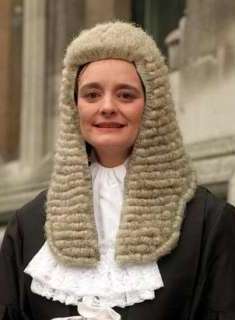 The news that Cherie Blair's time as a leading member of the England WAGs (Wives And Girlfriends) has passed away after nine-and-a-half years has come as an enormous shock to expensive hairdressers and style consultants across Britain and an enormous relief to Labour Party supporters and Downing Street officials.
Cherie Blair's WAGhood was born in May 1997 when, with her husband elevated to the Premiership, humble Cherie Blair - the straightforward young woman who once told a reporter she could have grown up to be a simple Liverpudlian shopgirl - joined the ranks of "Wives And Girlfriends" of the international scene's most famous players.
Though often criticised for finding herself in the light of media stardom only due to her proximity to her silky-skilled husband, there can be little doubt that as a WAG Cherie brought something unique to the celebrity firmament, even if that unique something was merely a tendency to shoot her mouth off at extremely unfortunate moments. Certainly, things began well for Cherie's WAGhood - with her husband's electrifying pace of reform and exquisite bill-passing skills receiving praise abroad as well as at home, Mrs Blair soon found herself jetting first class around the globe, staying in the most luxurious locations and being pictured in the most glamorous nightspots in the most expensive of designer creations.
While Tony spent his days juggling balls with top-flight international players such as Silvio "I Own The Referee" Berlusconi and George "Bomb Your Legs Off" Bush, Cherie spent them indulging her hobby of being a lawyer, giggling with her style consultants and £275 a go hairdressers, or indulging in house-buying trips with Australian conmen. Her evenings were spent on Tony's arm, wining and dining with the country's leading celebrities, actors, artists, popstars and also Sir Cliff Richard.
It may be trite to assert that such a blessed life could not be long-lived but it was nonetheless true of Cherie's WAGhood. With her husband's pace and flair being sapped by the years, frequent conflicts with midfield maestro Gordon Brown, and tabloid rumours of an affair with George Bush, Cherie was soon facing the prospect of her WAGhood, like his career, being relegated to the bench. Attempts to carve out her own career in charity work were frustrated by the fact a major beneficiary so often seemed to be Cherie herself, while attempts to carve out a career as a respected judge were frustrated by her tendency to indulge in Mayan rebirthing ceremonies to readjust her energy flow. The final blow was to come when Tony suffered a dreadful injury following a tackle from behind by several members of his own team, led by Gordon Brown. Facing isolation and loss of her WAG privileges, Cherie's WAGhood spontaneously combusted.
The funeral ceremony was held in Manchester on Tuesday. As the WAGhood's small urn was placed in its niche before an honour guard of Hopi ear candle sellers and an audience who had been forced to pay £300 a head for the privilege of attending, Cherie herself was overcome by her emotions. That these emotions were chiefly malice and rage became evident as she had to be dragged from the graveside, screaming "F***ing Brown. I'll rip the lying Scottish get's f***ing throat out".
Cherie Blair's WAGhood is survived by a massive mortgage, a series of highly profitable "charity" lectures and Samantha Cameron.
11 September 2006
| [+/-] |
Gordon Brown's Chance of Ever Becoming Prime Minister 1994-1994 |
 Gordon Brown’s Chance of Ever Becoming Prime Minister was found dead this weekend after constables broke down the door of its Downing Street residence. The police had been alerted to a possible tragedy by a noisy and protracted domestic row between Mr Brown and his neighbour.
Police sources revealed The Chance of Gordon Brown Ever Becoming Prime Minister had been stabbed through the heart with a silver fork bearing the legend “Granita”. It is thought that the fatal blow was struck by Tony Blair during a lunch at the Granita restaurant, Islington in 1994, when Gordon agreed to let Mr Blair become Prime Minister – in return for Tony picking up the bill for the meal.
It appears that a macabre cult, known only as The Brownites, had concealed the death from the Prime Minister, an unsuspecting media and even Mr Brown himself. The necrophiliac group worshipped the corpse daily, believing a day would come when it would be resurrected as the saviour of the Labour Party, the nation and Raith Rovers FC.
For the last 13 years the media unquestioningly accepted The Brownites' claims that The Chance of Gordon Brown Ever Becoming Prime Minister was alive and well. Recent sightings of vultures circling Downing Street led to a vigorous investigation into the health of The Chance, however, and - following reports of crockery being thrown at Number Ten during a meeting between Brown and Blair - journalists scented blood ... or possibly embalming fluid.
Members of the Labour Party, realising the game was up, readily confessed the truth about the gruesome murder – prompting Charles Clarke to accuse Gordon Brown of “absolutely stupid” behaviour, an area in which the disgraced former-Home-Secretary is a much-respected authority.
The Chance of Gordon Brown Ever Becoming Prime Minister will be cremated at a Private-Finance-Initiative funeral this week. It is survived by Mr Brown's beloved Prudence and Prime Minister Tony Blair.


