 The As A Dodo team is proud to present the first instalment of our new, occasional series of obituaries from the future, kindly provided by our Tralfamadorian correspondent, whose moving eulogy in these pages to the late Kurt Vonnegut our readers will doubtless recall.
The following posting was occasioned by Health Secretary Alan Johnson's comparison of the threat from obesity in the United Kingdom to that of global warming. While some might consider this to be as alarmist as comparing the threat from overtight underwear to that of MRSA, it appears that Mr Johnson's warning was more foresighted than might have been thought.
It is with great sadness that I must inform the readers of As A Dodo of the passing of the North Polar Fat Cap, that great white mass (not to be confused with the Chris Moyles of your own early 21st century) at the top of the globe that has finally melted away thanks to the effects of global warming.
The North Polar Fat Cap was, as any twenty-sixth century high school student would happily tell you, first conceived in around 2080 after the failure of humanity's many attempts to avert global warming (even including President Bush's brilliant scheme to launch a giant mirror into space(1)) led to the final destruction of its chilly predecessor, the North Polar Ice Cap, and caused great devastation to the lifestyles of many Inuit, Eskimo, Lapps and others, not to mention thoroughly buggering up the prospects for large numbers of wildlife documentary-makers who had finally got the funding for that feature-length piece on polar bears and just crossed the last T on the script for the Morgan Freeman voice-over.
Without the reflective properties of the vast white expanse, global warming began to accelerate rapidly, imperilling the lives of millions and - even more importantly - threatening the lifestyles of the non-domiciled mega-rich businessmen and women who could afford riverside property in London. So it was that the greatest minds that the Earth had to offer were gathered together to come up with a scheme to replace the ice cap with something equally white. Many suggestions for suitable resources to replace the once-vast swathes of ice were made. Some advocated painting an enormous white sheet over the top of the world but this plan was rejected after several of those present insisted they never liked white and would prefer to paint the world magnolia. Others put forward a scheme to coat the arctic circle with the most pale and reflective substance known - naked Scotsmen and women - but this too was rejected on the grounds that the reflective qualities would be so great they would risk blinding anyone who dared venture north of the equator.
In the end there was only one suitable substitute for the formerly icy arctic wastes - humanity's most abundant and ever-increasing resource: fat. With experts having calculated that the average American tourist's excess lipids would be enough to cover several square miles of water and with even a British twelve-year-old capable of providing enough fat to cover an area the size of several football pitches, liposuctors were soon gathering from all over the world to help slim down mankind and fatten up the new North Polar Cap.
For centuries the North Polar Fat Cap floated over the Arctic Ocean, providing both a new - if slightly sticky and extremely malodorous - home for the polar bears, a fabulous incentive for the indigenous peoples of the Arctic Circle to go into the plastic surgery business and the best justification yet for the existence of fast food.
Yet the North Polar Fat Cap was just as doomed as its predecessor. Despite the warnings of the environmental lobby, mankind still continued to burn fossil fuels in order to power its vital endeavours (endeavours such as driving the three metres to the local shop to pick up your pre-packaged, pre-grated cheese, keeping 112 set-top boxes, 73 gaming consoles and 98 computers chugging away on standby in every household and providing sufficient energy to keep Madonna, Al Gore, Prince Charles and their huge entourages jetting around the world to vast air-conditioned conference centres to lecture us all on how we should use less energy) and so the world's temperature continued to rise. By 2507 things were so hot that the North Polar Fat Cap itself melted, vanishing almost overnight with a brief sizzling sound.
The North Polar Fat Cap was buried at sea in the Arctic Ocean. It is survived by an overpowering odour of mechanically-recovered meat sandwiches and a lone teenager crying in the watery wilderness, "Do you want fries with that?"
(1) reported by As A Dodo here.
15 October 2007
| [+/-] |
FutureDodo: The North Polar Fat Cap 2080-2507 |
23 July 2007
| [+/-] |
The Quest for Atlantis c360 BC - AD 2007 |
 Today all of Britain (or at least that part of it which is not currently under six feet of water) stands (or wades) astonished at the death of the Quest for Atlantis, following the news that the fabled underwater civilisation has been discovered in the watery realm of legend that was, until yesterday, known as the Vale of Evesham.
The Quest for Atlantis was born, like Democracy and ... er ... Weekly Rubbish Collection, in Ancient Athens. It was in around 360BC that Plato described the island of Atlantis in his dialogues Timaeus and Critias(1). The great philosopher claimed that the rich and fruitful isle lay beyond the "pillars of Heracles" and was the home of a wealthy and noble race who received tribute from the peoples across Europe and Africa until their island home was plunged beneath the waves by a wrathful Zeus.
Inspired by Plato's words and ever eager to believe tales of lost civilisations (especially lost rich civilisations that might have left a bit of gold and jewellery lying about when they mislaid themselves) generations of adventurers were to go in quest of fabled Atlantis. Some claimed it was the birthplace of the Ancient Gauls, others that it was the true home of the Mayans and Aztecs. It has been located by scholars(2) variously in Antarctica, Indonesia, America and even below the Bermuda Triangle. Who could have known that Plato's references in fact pointed to a region of England best known for being a fairly good (if rather dull) base for anyone visiting the Cotswolds? And yet, who can truly doubt it? Is it not a fruitful region, famed for its harvests of plums and asparagus? Does it not still receive tribute from across Europe and Africa, indeed from the very Antipodes, in the form of assorted unseasonal fruits and vegetables flown into its Tesco Superstore? And is not the Vale's recent drenching by an inundation of a level so extraordinary and unexpected that the Met Office had only been warning the Government of it for the past 12 months, the sign of a renewal of Zeus's wrath (or possibly an incompetent Government)?
The conclusive evidence for the experts' conjectures that the Vale was the site of Plato's fabled civilisation came when a representative of Patrick Duffy - the "Man from Atlantis" himself - claimed the former Dallas star had agreed to appear in a production of 20,000 Leagues Under the Sea at Evesham Arts Centre (although this was, admittedly, due to a mistaken belief that Evesham Arts Centre was a new West End Theatre). And thus has Atlantis finally been located and thus has the Quest for Atlantis passed, like so many gallons of floodwater, under the bridge.
The Quest for Atlantis will be buried on the seabed or in the middle of Evesham's main car park, depending on which is at the greater depth. The Reverend Captain Nemo will preside over the ceremony and the congregation will sing hymn number 423, "For Those in Peril Under the Sea" before hastily reaching for their aqualungs.
The Quest for Atlantis was predeceased by millions of pounds of funding for flood prevention projects cruelly cut down in their prime by wicked Chancellor Gordon Brown and now resurrected by our glorious Prime Minister ... Gordon Brown. It is survived by vast swathes of devastation, wholly inadequate and underfunded flood prevention schemes, plans to build thousands of homes on flood plains and the spectre of King Cnut rising from his (watery) grave to shout "Not such a laughing stock now, am I?" in Old Norse at any plucky soul that might pass by.
(1) also, coincidentally, the name of an Ancient Athenian department store.
(2) and loonies.
09 July 2007
| [+/-] |
Live Earth 7/7/07-7/7/07 |
 Eco-campaigners and celebrity publicists eager to get their charges some front page coverage(1) are today mourning the passing of Live Earth, which let slip the bonds of gravity and slipped past the ozone layer and beyond only 24 hours after its birth on 7th July 2007.
Live Earth was the consciousness-raising progeny of former Vice-President Al Gore - a man whose credentials are so green that he had his own charisma hand-crafted from solid wood - and a large number of pop stars eager to flog some 'Best of' albums save the planet from "that, like, global warming thing, yeah" in a way which didn't involve them giving up their private jets. From the outset its ecological bona fides were clear, having itself been recycled from 'Live 8' which had seen the gathering together of a large number of pop stars eager to flog some 'Best of 'albums "end like 'Third World' poverty, yeah" in a way which did not involve them putting a hand into their own pockets.
Yet, despite such good intentions a cloud hung over Live Earth almost from the moment of its birth. That the cloud consisted of the estimated 75,000 tonnes of CO2 generated by producing and watching the series of Live Earth concerts around the globe was, perhaps, unfortunate, especially as Live Earth's parents had done so much to offset its carbon output by patronisingly paying a small tribe in the Amazon rainforest a tenner to install eco-friendly lightbulbs.
Even in the face of such difficulties, Live Earth's carers did their best to carry on, flying in from across the globe in their personal jets to wish it well and deliver two songs from their back catalogue and one from "the new album, available on iTunes right now". Band after band and singer after singer rose up to express the rock'n'roll spirit of the age, not by urging their fans to fight the power, rise up against big business and a capitalist system based on the acquisition of more and more planet-destroying consumer goods, but rather by turning off a few lights and remembering not to put their tellies on standby. Particular praise must go to bands such as Snow Patrol and Keane who have done so much to pick up and recycle discarded rubbish down the years, even if the discarded rubbish in question is the music of Coldplay.
Nonetheless, with the cloud continuing to hover over Live Earth, many experts were already warning that it might pose a threat to health, especially when combined with the output from its pop parents' massive egos. With Sting's arrival on stage at the Giant's Stadium in New York the cloud began to pulsate weirdly. It was Madonna's appearance at Wembley, however, that sent the cloud (not to mention several members of the audience) critical. The resulting explosion of noxious gases and even-more noxious egos sent Live Earth hurtling into space, leaving behind a Wembley Stadium so heavily irradiated that only those shielded by vast salaries, massive egos and motor cars with the carbon output of a small jet will be able to use it in future ... which at least makes it the perfect venue for football matches.
Live Earth is survived by increased music downloads for the artists involved, Al Gore's As-Yet-Unannounced-Presidential Campaign and a public still so thick that 50% of it doesn't believe in global warming despite the fact that the data have convinced just about every sane scientist on earth - bar a few professional members of the awkward squad, some professors who owe their shiny new laboratories to the generosity of the oil companies and a couple of guys who think a dodgy Channel 4 documentary is an even easier way to get on the telly than Big Brother - that the planet may well be on the way to Hell in a very hot handbasket.
(1) That is, front-page coverage unrelated to drug abuse, sexual infidelity or the adoption of yet another child from an impoverished country in the Southern Hemisphere.
01 May 2007
| [+/-] |
Smoking in Public c.16th Century-2007 |
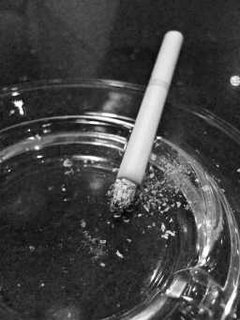 Smokers from the Castlerock to Crossmaglen and from Bangor to Belleek are today shouting short-temperedly at their partners and downing their Guinness with extra haste in memory of Smoking in Public, which has gasped its last, wheezy breath following the introduction of a ban on public smoking in Northern Ireland. The province's ban affects workplaces, pubs and restaurants but not sectarian bonfires or smouldering rubble. With public smoking already banned in Scotland and about to be outlawed by CCTV, Asbo and threat of extraordinary rendition to Guantanamo Bay in England and Wales, Smoking in Public is on its way to the Great Ashtray in the Sky.
Smoking in Public took its first puffs in the 16th century after Sir Walter Raleigh finally gave up his attempt to convince Elizabethans to adopt the practice of smoking potatoes and putting lashings of salt and vinegar on their deep-fried tobacco, and instead filled his pipe with some rough shag he’d brought back from the New World.
Thanks to its addictive qualities (as well as the fact that it makes you look dead sexy ... usually about 30-40 years before it just makes you look dead) Smoking in Public became hugely popular. It was not without its critics, however: in 1604's A Counterblaste to Tobacco King James I himself was moved to warn that smoking was “A custom loathsome to the eye, hateful to the nose, harmful to the brain, dangerous to the lungs, and in the blacke stinking fume thereof, neerest resembling the horrible Stigian smoke of the pit that is bottomelesse”, much to the amazement of courtiers who were unaware that he had ever been to Birmingham.
It was in 1605 that Smoking in Public really caught the public’s attention, when Guido Fawkes(1) attempt to "poppe into the cellares for an crafty one" nearly blew up King James and the whole of Parliament. Luckily for him and everyone else in the building, guards prevented Guido's carelessly-discarded cheroot from accidentally igniting the pile of old barrels stored in the cellar. As a warning they took the foolish Guido aside and had a quiet word with him about the dangers of smoking, while hanging, drawing and quartering him just to make sure the message got home. And that is why, to this day, Britons burn bonfires on November 5th to remind themselves of the dangers of smoking.
Despite the early knowledge of the harmful effects of inhaling the smoke of cured tobacco leaves, 17th century man, woman, child and, in some circuses, chimpanzee took up the habit with gusto – puffing away on their pipes and roll-ups without a care in the world – assuming that the blood they were coughing up was just the harmless first sign of tuberculosis or plague.
Smoking in Public caught on like wildfire, as - during hot, dry summers - did much of the surrounding countryside. By the 20th century, stoked by popular images of Hollywood stars moodily inhaling a Lucky Strike or Chesterfield whilst eyeing up the femme fatale, looking at the dead body or relaxing after the train had entered the tunnel, everyone – from new born babes in their mothers’ arms to grandfathers (quite literally) breathing their last – was sucking on a fag, meerschaum or hookah.
In the post-war years, however, people began to realise they were alone with a Strand and that the smell of a busy day at the crematorium that hung about them might have something to do with it. With the arrival of new scientific evidence that nicotine was more addictive than Deal or No Deal (but not quite as harmful), Smoking in Public came under heavy pressure to pack it in, knock it on the head, go cold turkey and try patches, hypnotism, and that silly ceramic pipe that everyone’s too embarrassed to use.
Eventually, even the appearance of increased intellectual activity and emotional intensity derived from inhaling a Gauloises with the filter broken off began to pall. With the increased awareness of the fatal consequences of smoking – that unique kipper-factory odour, Judith Chalmers-style leathery skin and a voice deeper than Mariella Frostrup’s – Smoking in Public began to cough, hack, wheeze and expectorate colourfully. Complaining of a lack of breath, Smoking in Public exhaled a final plume of blue-grey smoke and was extinguished.
Smoking In Public will be cremated behind closed doors in a private ceremony with a special licence to smoke. There will be regular five-minute intervals – every five minutes – for smokers to step outside and bang another nail in their coffin. The congregation will sing “Smoke Gets In Your Eyes… And Your Throat, Lungs, Heart, And May Harm Your Unborn Baby”.
(1) No, not this one. (2)
(2) Or even this one.
30 April 2007
| [+/-] |
The White Cliffs of Dover c.12,000BC-2007 |
 The As A Dodo Editorial team apologise for the following obituary. It would seem that, contrary to approved practice, our obituarist did not attend the scene from which he was reporting, relying instead on the in-no-way-hysterical reportage provided by the BBC, ITV News, Sky News and print media, all of whom chose to cover a small earthquake in which one person suffered minor injuries as the end of the world. The obituarist will be offered a pearl-handled revolver and asked to do the decent thing just as soon as he can be bothered to unstick himself from the sofa and trudge into the office.
There are no more bluebirds over the White Cliffs of Dover, after that ancient symbol of this sceptred isle crumbled and sank beneath the English Channel following the complete destruction of Kent, and everyone in it, during a massive earthquake on Saturday morning.
The White Cliffs of Dover were born 12,000 years ago at the end of the Devonian era as the Ice Age ended and the melting glaciers exposed those chalk edifices in their full, pasty glory for the first time. Within days, the Cliffs became a rallying point for patriotically-minded hunter-gatherers unnaturally proud of their new island status, sending out a message of British independence to those pesky Gauls across the Channel – not to mention becoming a popular jumping-off point for effete Guardian-reading hunter-gatherers who had already grown weary of patriotically-minded hunter-gatherers' intolerance towards their European neighbours.
Over the centuries the Cliffs guarded the gateway to Britain, warning off invaders from Napoleon to Hitler who schemed to add this green and pleasant land to their empire of subjugated territories, and completely failing to halt those invaders like Julius Caesar and William the Conqueror who had the nous to land at more gently-sloping beaches further along the coast.
During the darkest days of World War Two, The Cliffs had their “finest hour” – single-handedly defeating the Luftwaffe – and were immortalised (or so it was believed at the time) by Vera Lynn in her 1940 hit download, White Cliffs (Don’t Do It) in which she rapped about the dangers of becoming addicted to a powerful narcotic cut by profiteering spivs with large quantities of Dover chalk. (might need to check this bit, where's Wikipedia?)
But the war had taken its toll on the Cliffs and they no longer had the strength to raise two fingers to the Continent. Membership of the European Union led to the construction of a monumental folly – a railway tunnel linking France and England. Giant machines bored a huge hole through the Cliffs' heart, allowing millions of tourists to travel at high-speeds to London and thousands of desperate refugees dreaming of a better life to take up those really crappy jobs that Britons themselves refused to touch with a barge pole - much to the outrage of those very same Britons who kept complaining loudly about "these bloody people coming over here" even as they purchased their burgers from them, got them to fix their dodgy sewerage systems and sent them out to drown whilst cockle-picking.
Fatally undermined, the Cliffs stood no chance against the powerful earthquake measuring a massive 4.3 on the Richter scale (about the equivalent of two bluebirds colliding) which struck in the Straits of Dover. Panic ensued as Canterbury Cathedral collapsed, its extensive building insurance failing to protect it from an Act of God, the people of Tunbridge Wells were buried under an avalanche of disgusted letters to the Daily Mail about the incorrect use of the word "whom" and the town of Sandwich's plan to shelter itself between two layers of bread proved a complete and utter failure.
Kent slid into the English Channel and the Garden of England became the Sunken Garden of England, the White Cliffs of Dover hanging on until the very end when even they were submerged beneath the churning grey water and buried at sea, along with the last vestiges of Britain’s insular and arrogant attitude towards the rest of Europe and everyone in it. But still… at least we’re now a lot further away from the French.
26 April 2007
| [+/-] |
Weekly Rubbish Collection c.500BC-2007 |
 People throughout the country are today putting pegs on their noses and dragging out their pomanders as they prepare to remember the sweet(ish)-smelling streets of England that existed before the death of Weekly Rubbish Collection, which has passed away across much of the realm.
Weekly Rubbish Collection was born in Athens in about 500BC, when the sudden outbreak of democracy finally allowed the people of the city-state a chance to complain about the huge pile of rubbish that had been building up for the past few hundred years without fear of one of the tyrant's hoplites gently counselling them at spearpoint to "shut up and get back to the philosophising". Soon the world's first municipal landfill site was opened a mile outside the city gates, at last giving the Athenians a spot to dump unwanted gifts of philosophical tracts, spare Elgin Marbles and excessive packaging from pots of hummus.
Despite the Athenians' good work and numerous advances in waste technology by the Romans, the progress of rubbish collection was halted and then put into reverse by the arrival of the Dark Ages, so-called presumably because no-one wanted to put a light on for fear of seeing the great piles of ordure that surrounded them. By the late 13th century matters had become so bad in Britain that in 1297 a law was passed in England requiring householders to keep the front of their homes free from rubbish, which was marvellous news for anyone passing along the streets before the houses but not so good for anyone who happened to be playing in the back yard at the time.
In 1354 Weekly Rubbish Collection finally came to Britain, with each of London's wards employing "muckrakers" to rake rubbish together, load it into carts and remove it once a week (unlike today when muckrakers rake rubbish together, load it into their laptops and publish it in newspapers and on the internet every day). By 1407 householders were being required to keep all their rubbish indoors until the rakers could collect it and carry it off - in a move that would set a long-lasting trend - to Essex.
The glory days of Rubbish Collection, however, were ushered in by the Industrial Revolution - allowing Britons to produce such vast amounts of goods that it finally became possible for all strata of society to be able to afford to chuck stuff away. With the streets now filled with malodorous waste and malodorous freelance waste-collectors, in 1875 The Public Health Act was passed, requiring local authorities to arrange the removal and disposal of waste and requiring householders to store their rubbish in dustbins.
For more than a hundred years the system worked well. Each week the dustbin men would arrive at an ungodly hour in the morning and rouse the sleeping neighbourhood with an impromptu rendition of the louder bits of Stomp, before collecting up the rubbish bins and scattering a portion of their contents over the streets as an offering to the dusty gods.
Trouble lay ahead for Weekly Rubbish Collection, however. With new technologies and increasing wealth - not to mention supermarkets' desire to add value to their products by encasing them in more packaging than is required for the disposal of nuclear waste - came an explosion in the amount of rubbish generated by each household. Soon landfill sites were filling up, incinerators were overloading and councils were dragged low by the cost of waste disposal. In the end the only option open was to cancel Weekly Rubbish Collection altogether, replacing it with its younger (eco-friendly but rather less hygienic) sibling the Alternate Weekly Collection or AWC. With the AWC loudly proclaiming its green credentials to the people (and its cost-saving benefits to the councils) while merrily collecting rubbish one week and recycling the next and leaving the rest to hang around attracting flies, rats and tabloid hacks desperate for a scoop about what Z-list celebs throw away, Weekly Rubbish Collection found itself supplanted.
Weekly Rubbish Collection will pass away just as soon as there's no danger of its death harming any local election results. It will be cremated in a municipal incinerator before having its ashes scattered up and down the street outside your front door. It is survived by a surprisingly fat urban fox population, piles of bin bags on the pavement and a continuing unwillingness on the part of Brits to recycle rubbish anywhere other than their TV screens.
26 March 2007
| [+/-] |
British Garden Songbirds c. 1650-2007 |
 Bleary-eyed residents across the UK are celebrating this week, following the news that British Garden Songbirds have whistled their last thanks to a mild European winter and a bumper countryside fruit crop leading to the end of cheery chaffinches, bubbly blackbirds and wide-awake wrens visiting UK gardens and waking you at bleedin’ dawn with their chorus.
British Garden Songbirds were hatched about the time of the first British garden when Capability Brown encouraged a family of starstruck thrushes to go into show business – creating the first song thrush. It would whistle merrily at dawn to protect its territory, attract a mate and severely annoy the owners of Capability Brown’s new garden until they finally settled their bill in full, or fell, dazed from lack of sleep, into the haha.
With the growth in popularity of gardening, soon the Victorian working classes were able to enjoy the beauty of The Songbirds’ renditions of music hall ditties – with the added benefit of being woken early enough to spend a good 12 hours a day up a chimney or getting their tired limbs caught in a mechanical loom.
As trades unions and socialists won new freedoms for the working man and woman, people were able to spend more time in their gardens and allotments, especially as they now had a gap of several hours to fill between being woken at sun-up by a robin crooning Itsy-Bitsy Teenie-Weenie Yellow Polka Dot Bikini and the start of the day’s work at nine or ten o’clock.
Despite desperate attempts by the Royal Society for the Protection of Birds to convince homeowners that The Songbirds were a wonderful addition to any British garden and that standing at the kitchen window with a pair of binoculars and a book of British birds was an exciting way to kill a few hours on a Sunday morning, relations between homeowners and Songbirds began to sour – especially when The Songbirds went electric in the 60s. Soon British gardens were awash with moptop warblers (both garden and willow) belting out And Your Bird Can Sing at ear-splitting volume.
The relentless ambitions of many songbirds to make it to the toppermost of the poppermost through their open-air performances reached its nadir in the early 90s with the release of British Garden Songbird’s debut album, Swingalong-a-Dimmock – and the backlash began in earnest.
Fatigued and jaded gardeners began to encourage robins to perch jauntily on the handle of their shovel whilst they whistled a medley of Andrew Lloyd-Webber tunes – all the while, the jazz-hands robin oblivious to the fact that the gardener was using said shovel to dig a six-foot-deep bird-shaped grave.
Salvation arrived as an unexpected benefit of global warming, as an unseasonably warm winter lured The Songbirds away from the limelight of the British Garden into the obscurity of the British countryside. After several hundred years, British gardens fell silent and a nation went back to sleep.
British Garden Songbirds will be buried in a silent ceremony at St Oddie’s Church of the Annoyingly Dull Twitcher. They are survived (for now) by Bill Oddie.
12 March 2007
| [+/-] |
Cheap Flights 1985-2007 |
 Cheap Flights reached the end of their short but lucrative runway this weekend following the announcement that the Conservatives plan to introduce a tax on frequent flyers with a green air miles scheme designed to limit damage to the environment - particularly if that environment is anywhere in the vicinity of a hen party with £1.00 tickets to Dublin.
Cheap Flights took off for the first time in 1985 when Ryanair went into competition with British Airway and Aer Lingus, flying from Waterford to London, and providing a much cheaper alternative by economising on "fancy frills" such as customer service and leg room for anyone taller than The Seven Dwarves.
By the early 90s Cheap Flights had become a popular and cost-effective way of enjoying what felt like a near-death experience at a fraction of the cost of Alton Towers. With EU deregulation of the air industry in 1997, the skies over Britain were filled with planes carrying passengers to weekends in such romantic European destinations as Stuttgart, that strange bit of Paris that is actually 50 miles from the city itself and is only used by cheap flights and the crop dusting plane from "North by Northwest" and the Stansted Travelodges that are the only alternative when you've been unexpectedly bumped off a flight despite having booked it several months in advance.
With growing concern over the environmental impact of Cheap Flights during the noughties, the 21st century equivalent of the Battle of Britain began. In the early days of the conflict, Ryanair and EasyJet prevailed, but despite increased demand for short-haul flights (so-called because the passengers were often called upon to haul the plane from the terminal concourse to the runway) environmentally-aware politicians and Conservatives looking for an image change soon began to inflict heavy losses.
The last post was sounded when Shadow Chancellor, George Osborne, dared to speak out on behalf of the environment in a brave move to protect our beautiful planet in no way connected with the opportunity to embarrass a Labour government with all the green credentials of Jeremy Clarkson. When David Cameron - who had joined the Mile High club as a teenager despite never having boarded a plane - came flying out of the sun with all environmental policies blazing, Cheap Flights were riddled with holes, took a sudden nose-dive and crashed and burned... something many passengers had been predicting would happen for years.
Cheap Flights will be buried at St Leslie Nielsen's Church of Airplane! Mourners will be flown to East Midlands airport, 120 miles from the service held in the duty-free concourse of Luton Airport. Admission will be £0.50 (inc. wake taxes £75.00), a 100cl bottle of Lithuanian red wine £4.00 and complementary nuts £12.50. Passengers will be asked to join in the singing of Cheap Flights favourite hymn "There is an airport far away".
Cheap flights are survived by unseasonably warm weather, a load of lonely raffia donkeys and a massive increase in day-glo fake tans.
16 February 2007
| [+/-] |
Tony Blair's Nuclear Plans 2005-2007 |
 Tony Blair’s Nuclear Plans have emitted their last after a titanic struggle with Greenpeace led the High Court to rule that plans to build a new series of reactors were “unlawful” and that the Government's consultation process was “misleading”, “seriously flawed” and led everyone else to rule they were "absolutely typical".
The Government having sat down with the nation in 2003, talked things through and decided not to give birth to nuclear power - despite the attractions of having someone to look after one's energy needs in old age - because of all the mess it would cause, Tony Blair’s Nuclear Plans were a surprise birth in late 2005. The surprise was particularly great as the Prime Minister had faithfully promised the nation that he would have his nuclear power generating organs tied up in a lengthy consultation process.
Following the birth Mr Blair was quick to assure the, still startled, country that his new progeny would close the country’s “energy gap” and conveniently reduce carbon emissions as well as helping turn Britain into a world leader for three-eyed fish and glow-in-the-dark seaweed.
Despite Mr Blair's pride in his offspring, as the Plans grew older and their power leaked dangerously across the country, the High Court was surrounded by angry and terrified members of Greenpeace armed with hemp-woven pitchforks, torches knitted from muesli and some of the best lawyers money can buy, demanding an urgent judicial review.
With Greenpeace warning that the success of the Plans might plunge the nation into a nuclear nightmare in which schools, hospitals and even civil liberties might be laid waste, the High Court - after wondering whether anyone would notice the difference - ordered that the knot in the Prime Minister's enormous desire for a nuclear legacy be re-tied.
Tony Blair’s Nuclear Plans will be buried in a lead-lined coffin in the graveyard of St Sellafield Church of the Poisoned Sea, from which they will arise just as soon as the Government can fake another consultation. The service will be conducted by a two-headed vicar. Hymns will include “When Irish Eyes Are Glowing” and "There Is a Luminous Green Sheep Far Away".
Tony Blair’s Nuclear Plans are survived by Tony Blair’s complete refusal to listen to anyone except himself.
29 January 2007
| [+/-] |
Rapid Global Warming 1979-2007 |
 The death of Rapid Global Warming was received with scenes of joyous celebration around the world after it was announced that President George W Bush - inspired by the brilliant work of Montgomery T Burns and Professor Ogden Wernstrom - had authorised a crack squad of highly-trained giant mirrors to assassinate it by cutting off its vital supply of light from the sun.
Rapid Global Warming was born in 1979 to a long line of Warmings which have ruled the planet since time immemorial. The youngest Warming quickly set to work in the family business and soon made its parents proud as it increased the rate of land temperature twice as fast as ocean temperatures. Setting a pace faster than any predecessor since that embarrassing incident with the barbie led to the Paleocene-Eocene Thermal Maximum, many critics alleged that it was only able to maintain itself by mainlining fossil fuels in quantities that would make even Keith Richards wobble slightly and go, “Wow!”
Throughout the 80s and 90s, Rapid Global Warming was engaged in a long battle against opponents such as The Greens, riding rough-shod over claims that its fossil fuel intake would lead to the destruction of the planet and breaking into their house at night while they were sleeping, to leave their TV, stereo and PC on standby and leave their fridge door open.
It was in the early twenty-first century that the first blow against Rapid Global Warming was struck, when the US government, realising that invading foreign countries for oil is a lot more trouble than it’s worth, rushed to staunch its haemorrhaging popularity by launching a sneak attack using the most-sophisticated sun-blocking technology since the invention of the knotted handkerchief. Crippled by the most cunning plan in space since the cool-headed and logical thinking which gave birth to President Reagan’s Star Wars laser-missile defence plan, Rapid Global Warming quickly fell into decline. It finally passed away at the weekend at its family home, with all the windows open and the radiators on full blast.
Rapid Global Warming will be cremated on top of a giant oil well at St Bush’s Church of Last-Ditch Idiotic Ideas. It is survived by the US government’s plan to save us all by launching giant mirrors into space to block sunlight from reaching the Earth, and an increased use of fossil fuels and nuclear power to meet the giant surge in demand for electricity as we try to see just where the hell we’re going and what the f**k we’re doing during the long, dark days of the coming Ice Age.
24 January 2007
| [+/-] |
Branscombe Beach c. 160,000,000BC-2007 |
 Mourners are already gathering to commemorate Devon's Branscombe Beach which died this week after being poisoned by the cargo ship MSC Napoli and trampled to death by freelance “environmentalists” engaged in a desperate last-ditch “rescue mission” (their mission being to rescue as much free stuff as possible before the police realised that taking shipwrecked goods without consent is actually theft).
Branscombe Beach began its very long life during the Jurassic Period over 200 million years ago when a marine incursion flooded Devon, providing it with its first shale beaches, spectacular cliffs, wonderful sea views and the beginnings of a long history of coastal vandalism.
For most of its life, Branscombe Beach contented itself with lying around and staring peacefully out to sea – its seaside idyll shattered only by the occasional passing teenage Ichthyosaur pausing just long enough to leave it’s footprint in some fresh shale for posterity.
It was with the arrival of Man that Branscombe Beach’s life changed forever. Early Neanderthals would gather by the sea in summer to complain that the beach was pebbly and not sandy, scream at their children, and dream of a day when the sea would bear giant cargo coracles that they could lure to the shore and pillage.
Celtic tribes settled near the beach around the start of the last millennium but continuous battles over seaside cream-tea franchises are thought to have taken their toll on the Beach. Its health continued to suffer in its later years as hopes of a quiet retirement were further dashed by an influx of smugglers and professional shipwreckers, lighting fires on the Beach and luring unsuspecting ships (and seamen) to their death in the hope of “salvaging” the latest tricorn hats bound for the Americas, or a BMW coach and four.
The Beach's weakened constitution was dealt a fatal blow last weekend when the MSC Napoli, bound for South Africa, foundered just off the strand, choking the Beach with fuel oil and the personal possessions of a Swedish family – including their prized collection of Abba albums and a cherished Ikea "Billy" bookcase that had been in the family for nearly 15 years.
Branscombe Beach was buried beneath a mountain of twisted freight containers, shattered gear-boxes, nappies and looters who were “just looking after the motorbike until we can return it to its rightful owner”, not to mention a thin veneer of oil, dead marine life and asphyxiated seabirds. The local council has refused permission for a cremation.
The Beach is survived by hundreds of miles of unspoilt Devon coastline – until the next ship disgorges its cargo providing a magnet for thieves from as far away as Middlesborough, desperate to get their hands on an empty barrel or some brine-flavoured cat food.
10 January 2007
| [+/-] |
Tony Blair's Green Credentials 1994-2007 |
 Tony Blair’s Green Credentials died this week after a long battle with plausibility when they were finally shot down in flames by his own sustainable development adviser, JonathonPorritt
Tony Blair’s Green Credentials were born in July 1994 when he became leader of the Labour Party and immediately began throwing out old Labour policies harmful to the chances of Tony Blair ever becoming prime minister. Clause IV – the party’s commitment to the common ownership of the means of production and exchange – was replaced with more Blair-friendly values such as unbridled consumerism, private finance initiatives and large cash “loans” for peerages, along with a new emphasis on sounding caring about the environment while actually doing bugger all about it.
With New Labour’s election victory in May 1997 Tony Blair’s Green Credentials were firmly ensconced at Number Ten – behind a desk made from timber taken from a renewable source, and in an office powered solely by the sun shining out of Mr Blair’s backside.
Tony's Green Credentials made their mark on the map by instigating a widespread plan to reduce governmental waste by recycling old Conservative policies such as privatising national assets, mucking up education and the NHS, appointing Home Secretaries who apparently base their moral philosophy on Genghis Khan and allowing cabinet ministers to become embroiled in embarrassing personal and financial scandals.
The unwavering pursuit of the eco-friendly even extended beyond Britain’s borders when, despite evidence to the contrary, Tony's Green Credentials refused to create new foreign policies, instead insisting on using second-hand American policies on waste disposal - largely involving the transportation of metals, explosives and depleted uranium to the Middle East where they were used to recycle buildings into rubble and people into bodybags
Sadly the continuing uncontrolled noxious emissions from cabinet ministers – particularly John Reid, David Millibandand Ruth Kelly – sounded the death knell for Tony Blair’s Green Credentials. When Mr Blair himself refused to accept the disastrous consequences of long-haul flights for the environment, or the unacceptable size of the scandal footprint left by his free holidays at the homes of bland UK pop stars, the Credentials slipped into a coma before being pronounced dead by green activists and Mr Blair's own environment minister.
The service for Tony Blair’s Green Credentials will be conducted at St Sellafield's Holy Roman Reprocessing Plant before being leaked into the Irish Sea.
Tony Blair’s Green Credentials are survived by David Cameron’s solar-powered, hydro-electric windmill and Menzies Campbell’s extraordinary conservation of energy.
06 December 2006
| [+/-] |
The Chelsea Tractor 1941-2006 |
 This morning middle-class mums across West London eager to drop their youngest off at prep school before making the dash to Harvey Nicks for coffee and a natter - not to mention the vast majority of automobile-owning North Americans and Jeremy Clarkson - were united in mourning the untimely death of the Chelsea Tractor, "4x4", "SUV" or "4WD", the powerful beasts that once roamed roads across the globe and which, for many, came to epitomise strength, versatility and total disregard for the environment.
First sighted in the wild in the early 1940s and known at the time as "Jeeps", Chelsea Tractors were initially seen by the vast majority as untameable creatures, always given to scrambling up hillsides and along twisting jungle paths and frequently involved in scenes of battle, whether they be in Central Europe in the dying days of the Second World War or outside Loretta Switt's trailer in M*A*S*H that time Alan Alda accidentally drove over her foot.
Some of the first attempts to tame the Jeep were made in Britain. A careful programme of cross-breeding resulted in the production of the "Land Rover", a sturdy (if usually slow) creature which spent its time skittering up mountainsides and down into valleys from the Scottish Highlands to the Cornish Coast, usually with a sheep or two in the back and often a lonely shepherd in a mounting state of excitement in the front.
By the late 1960s and early 70s, the rugged 4x4s had become a familiar sight across the countryside, with some of the braver individuals even being sighted on the outskirts of towns and cities. A confident furture for the species seemed certain. But then came the oil crisis of 1973. With their favourite food stuff (top grade petroleum) growing scarce, many predicted the powerful, if sometimes ungainly, animals could go the way of the Dodo. However, thanks to careful nurturing, they were able to survive in isolated rural pockets, living off a diet of red diesel and the odd drop of four-star. With the species' very survival under threat, top scientists at car manufacturers in America, Europe and Japan began selective breeding programmes. By the mid 1980's these programmes had borne fruit and the first Chelsea Tractors were able to be released into a new, safe environment - the city. Soon Chelsea Tractors were swarming over smog-filled traffic routes in urban centres the world over, braving hazards from speed bumps up to 5 centimetres high all the way to potholes up to 2 centimetres deep in their quest to carry little Julian from the front drive to soccer practice.
With the explosion of the species it could not be long before predators began to gather. Soon groups of environmental activists, teenagers eager for a cause and politicians eager to sweep up the green vote were seen gathering near the Chelsea Tractors' watering holes (or, as the locals know them "petrol" or "gas" "stations") and sniffing the air, before passing out due to all the fumes. Before long they took to setting up traps for the turbo-powered behemoths in the form of congestion charges and poisoning their food supply with green taxes.
By the mid-noughties, the Chelsea Tractor began to vanish from our streets. By the end there were only a few, unreliable sightings of the creatures - sometimes outside the palatial crib of an LA rapper, sometimes making the weary journey to Knightsbridge for the sales.
The Chelsea Tractor will be buried under a mountain of high petrol prices and increased environmental awareness. It is survived by an increasing number of erratic cyclists, scooters, bendy buses, the Smart car and trees.
30 October 2006
| [+/-] |
The Incandescent Light Bulb c1870-2006 |
 The whole of Britain will be plunged into darkness tonight following the unexpected death of the Incandescent Light Bulb, burnt out after almost 140 years of service.
Born in the latter part of the 19th century to at least 25 different inventors, all of whom claimed to have been on the scene at the time of its conception, the Incandescent Light Bulb was to brighten up evenings and nights across the globe for more than a century.
Ever eager to please, the Incandescent Light Bulb thrust itself into the world of entertainment. Soon it was adorning the dressing-room mirrors of West End stars and the fronts of the finest cinemas, not to mention adopting a fetching red hue in order to illumine the front windows of several Soho haunts favoured by MPs, judges, top celebrities and sad men incapable of forming a meaningful relationship. Within mere decades it had brought light to the most desolate and depressing places in Britain, including even parts of Blackpool, where "The Illuminations" are ritually celebrated to this day by groups of pensioners high on Stone's Ginger Wine and hen parties high on alcopops.
In the flowering of The Bulb's success lay the seeds of its failure. As it expended ever more energy on banishing the darkness The Bulb found itself cast in the role of profligate planet-destroyer by concerned scientists and economists as well as politicians eager to be seen to do something about climate change without having to, as the case may be, (a) talk to Gordon Brown about tax changes or (b) give up jetting off on fact-finding missions and having swanky official cars driving behind them just out of camera shot on the daily cycle ride to work .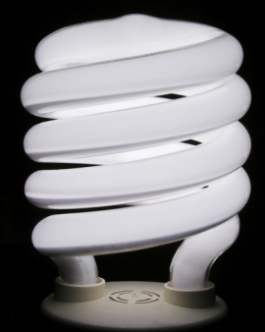 The tide of opinion turning against it, The Incandescent Bulb soon found itself under threat from lower-energy lighting alternatives including compact fluorescent lamps and random acts of arson. Increasingly lonely and unloved, and forced to rely for what little popularity it could retain on the frequent retelling of ever-more-tired jokes about the number of persons required to change it, the Incandescent Light Bulb was eventually to pass away following a collision with the Stern Review on the Economics of Climate Change and Environment Minister David Milliband.
The Incandescent Light Bulb will be buried by new green taxes. The Bulb is survived by cheap flights, millions of TVs left on standby and the energy policy of the United States of America.
31 August 2006
| [+/-] |
British Summer 2006, 1 June 2006-31 August 2006 |
 British Summer 2006 passed away this week after being soaked to the bone and catching a nasty chill in the torrential downpours that characterise the August Bank Holiday weekend. Despite bed rest, complications set in and “Summer”, as she was known to all and sundry, fell into a deep depression before, tragically, cutting short her own life.
Summer was born in June - after a difficult, and extraordinarily prolonged, labour, to Winter 05/06 and Spring 2006. She had a difficult upbringing: while her father was a surprisingly warm individual her mother was generally regarded as unusually cold and wet. It was perhaps as a result of this that Summer decided to throw off the traces with such abandon on leaving home - breaking temperature and sunshine records throughout June and July. But consulting meteorologists at the Red Sky Night Hospital believe this two months of “partying hard” – when she should have been raining on beach holidays in Llandudno and giving under-dressed fell-walkers in the Peak District hypothermia – may have led to her untimely demise.
She was laid to rest this week at St Ulrika's Seaweed Church of Meteorologists. In attendance at the funeral were many distraught friends and family including Wimbledon fortnight, members of the UK Holiday Industry and representatives of all the UK water companies. Global Warming was conspicuous by its absence, claiming to be too busy melting the polar icecaps.
Sadly, Autumn created a scene during the service – complaining that half her work had already been done by Summer 2006. Her brief, but intense, heat had already caused most flowers and plants to wither and die and made many trees across the country shed their browned leaves, while Summer's rains had prematurely ushered in the season of mists and miserable listlessness.
As British Summer 2006 was lowered into the ground, the Rev Michael Fish licked his finger, held it up to the heavens, said a short prayer for clement weather and was immediately blown away by an unexpected Force 12 gale.
British Summer 2006 was descended from a long line of appalling British Summers and is survived by Autumn 2006 and her ungrateful child, Winter 2006/07.


