 Digital Rights Management for music files – the software locks that prevent you playing iTunes music on your Sony Walkman, using your iPod to store tracks from Windows Media Player and makes it much more annoying to make illegal backup copies for personal use of your favourite tunes – has been declared dead following the decision by Apple and EMI to abandon the copyright protection system. Now, for an extra 20p “audiophiles” will be able to download the “music” of Robbie Williams, Coldplay, Joss Stone and Lily Allen and make as many copies as they like for others, thus threatening to drown the globe in an unprecedented deluge of the musical equivalent of magnolia paint.
DRM was born in 1996, the youngest of a whole family of corporate killjoys including 'Home Taping Is Killing Music', 'I Say, Making Copies of Wax Cylinders Just Isn’t Cricket, You Know' and that bit at the beginning of old episodes of Mission Impossible, where Peter Graves only gets to listen to his tape once before it bursts into a puff of smoke.
Like most other music companies, Apple wholeheartedly embraced the use of DRM to prevent piracy, but the plan backfired when they found that once people had downloaded Robbie Williams, Coldplay, Joss Stone and Lily Allen, they didn’t want to make endless copies of the tracks but instead found themselves overwhelmed by a desire to smash their brand new iPod into a thousand pieces before running down Chris Martin with his own Toyota Prius and beating him about the head with a branch hewn from one of his own carbon-offset forests.
Further blows to DRM came when it was realised that they had absolutely no effect on professional pirates who - unimpaired by their peg legs and hook-hands - always managed to break any form of copy-protection in less time than it takes for Steve Jobs to pull on a black turtleneck, leaving only the humble consumer to suffer. And suffer they did, especially in 2005, when it was discovered that some Sony CDs were surreptitiously installing copyright protection on listener's computers, thus interfering with their privacy and affecting the smooth running of Microsoft Windows, even more than Microsoft Windows itself affected the smooth running of Microsoft Windows.
Soon, music-lovers were clamouring for the right to download their favourite tracks to listen to as they pleased – whether on their computer, iPod, MP3 player, burnt to CD, cut to vinyl, taped onto an old C-90 found in their shed or banged out by that spare symphony orchestra they'd left in the attic. As critics began to argue that DRM did less to thwart pirates and more to punish innocent consumers – but not quite as much punishment as being able to listen to Lily Allen’s ironically titled single, Smile over and over again – EMI made the decision to remove the software locks from its digital downloads and DRM was deleted for the last time.
DRM will be buried at the Jolly Pirate public house this weekend. The congregation will download Robbie Williams’ Angels for 99p … and then bury that as well. It is survived by Robbie Williams, Coldplay, Joss Stone and Lily Allen. This Dodo will self-destruct in five seconds.
03 April 2007
| [+/-] |
Digital Rights Management 1996-2007 |
10 October 2006
| [+/-] |
YouTube 2005-2006 |
 As A Dodo can today confirm reports that the 18-month-old videosharing website YouTube has died after being swallowed up by a giant Google whale while paddling in the lawyer-infested waters.
Born in February 2005, from the outset YouTube had a simple mission, to carry video communications from person to person across the waters of the interweb, allowing anyone anywhere in the world to share a little piece of their lives with others by placing their videos on the internet. Few could have predicted how successful YouTube would be in its mission, while even fewer could have predicted that the bits of their lives people wanted to share were bad kung fu demonstrations, dodgy lightsaber work-outs and lip-syncing demonstrations that would shame Milli Vanilli. Even more shocking was the fact that so many people's home videos bore an eery, some would say exact, resemblance to old TV episodes and the latest music videos.
It was as the young internet company was plunging blithely through the notorious sea of Digital Rights Management, Copyright and Trademark Infringements that, laden down with episodes of Lost and Madonna videos, it found itself surrounded by a school of great white media lawyers, eager for the scent of huge litigation dollars. With its attempts to struggle on hampered by several rare episodes of The Six Million Dollar Man and Knight Rider, it seemed certain that YouTube would soon be devoured by the vile creatures but fortunately it was able to swim to what appeared to be a nearby island while the lawyers argued over fee structures. Sadly, however, it appears that the island was in fact merely a killer Google whale. YouTube was swallowed whole.
YouTube was buried in the early hours of this morning, the officiant being a 72-year-old Japanese gentleman who lip-synced to Green Day's American Idiot whilst wearing a Darth Maul costume. It is survived by a vast amount of litigation.
29 August 2006
| [+/-] |
iTunes 2001-2006 |
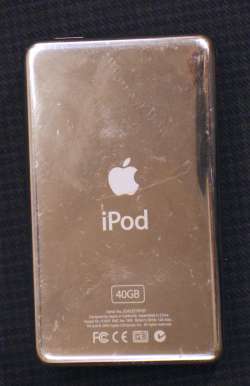 It is with great sadness that As A Dodo must report the passing away of Apple Computer's iTunes software, following a sudden and wholly unexpected assault by a gang of vested interests led by a rival digital media player application known as Spiralfrog.
iTunes was born on January 9, 2001 at MacWorld Expo San Francisco 2001, in a time when organising a record collection meant not filing your Lauryn Hill next to N'Sync and the best way to store tracks on a computer was to use its top as a CD rack. Starting off as a humble program, slaving away for hour after hour in the blinding glare of countless iMacs, iTunes was quick to see a means to escape. Soon, it found its way out onto the streets at the head of a pitiless gang of iPods, intent on making money by selling highly addictive "music" to young and old alike, meanwhile viciously wiping out any rival media players that dared to enter its 'Hood. Before long, children as young as five or six were finding themselves signing on as confirmed iTuners and spending hours on end "plugged in", their minds wasted by a diet of easily selectable tunes organised exactly as they wanted.
With iTunes' influence spreading wider and wider, it was perhaps inevitable that it would come under attack from rivals. Soon it was facing attacks from old-established gangs like the Walkmen and the Creatives, along with would-be "gangstas" like the Microsoft Zunes. Refusing to take to hiding, iTunes continued to be seen on the streets every day, right up to its final attack by the upstart Spiralfrog, apparently high on advertising revenue.
iTunes was buried in a simple white coffin, which will need to be replaced on a bi-yearly basis in order to remain compatible, or sooner if the fascia cracks.


