 A tribute to the pioneering German composer, by his close personal friend, popular band leader* James Last.
I first met Karlheinz at summer school in Darmstadt in the early 50s. I was working in the canteen serving up the schnitzels to the serious and spotty-faced youths hell-bent on bending the musical world to their serialist will, but there was something I liked about young Karly. When he dropped his metal tray on the floor spilling cutlery, crockery and sauerkraut everywhere he didn't do what every other student would do - ignore it and leave me to clean up the mess - he immediately took out his notebook and transcribed the sound. It later formed the basis of his ground-breaking work, TrayStucke.
Musically we were poles apart. He liked cutting up recording tape and reassembling it in a fashion that wowed critics and confused audiences across the Western world, while I dreamed of the day I could give up jazz to lead my own orchestra playing covers of light popular music that sounded as though they were recorded very far away at the bottom of a mine. But we had a lot in common: we were both German and we played the piano - I played it with my hands and my heart; Karlheinz played it with a tape recorder and a bratwurst. What a wunderkind!
While I was touring the bierkellers and airforce bases of West Germany, Karlheinz was spending days on end in the new electronic music studio at Westdeutscher Rundfunk in Köln. I would turn up from time to time to see how my great pal was getting on, but, of course, I understood he was too busy forging new musical directions to see me.
I'd met Paul McCartney in a nightclub in Hamburg and we'd hit it off immediately - especially when he confessed to me in the small hours of the morning his love for "a German composer, you've probably never heard of him, like... Karlheinz Stockhausen..." Well, imagine his reaction when I was able to introduce the two of them. They loved him so much they put him on the cover of Sgt Pepper's Lonely Hearts Club Band, and he returned the compliment by writing Drumwerks - a 24-hour cycle of percussion and tape loops for Ringo in 3/4, 4/4, 5/4, 9/8 and any other time signature Ringo felt like playing.
Though he was critically acclaimed, a big hit still eluded Karlheinz. I begged him to just once compose something a little lighter, something a little more accessible like Burt Kaempfert's A Walk Through The Black Forest. He nodded, and then retired to his study to fast for seven days. I paved the hallway like an expectant father - back and forth, back and forth, my footsteps growing heavier and heavier. Sure enough, seven days later, Karlheinz emerges, leaner, paler, with that mystical look in his eye which always said he had composed something extraordinary, something exciting... He beckoned me into his inner sanctum and played me his latest work, Man Pacing Expectantly. I listened mesmerised for the whole of the seven days it took him to play it!
In the 70s, while film producers and directors were starting to exploit the potential of contemporary compositions for scoring horror films, Karlheinz would have no truck with it. My good friend, Stanley Kubrick wanted him to score The Shining, but Karlheinz was not worldly enough to see the potential for promoting his work and making enough money to keep him in quarter-inch tape for the rest of his life. Instead, I had to step into the breach and knock out the score in under a week. Still, I cannot tell you how proud I was that Karlheinz said it was the scariest film he'd ever heard!
He continued to tread his own path. he was a spiritual man but he understood worldly matters - as anyone who heard Helikopter-Streichquartett would know. Four string quartets in four helicopters hovering over the audience. It requires no explanation from me, naturlich, and was enjoyed all over the world - particularly by General Noriega - who listened to it broadcast by the American military for three weeks - transfixed, he never left his home.
Like every true musical genius - like myself, Burt, Ringo - Karlheinz was often misunderstood. So when he commented after 9/11 that it was a work of art, naturally, the reactionary media pounced on him and the premiere of his new opera Twin Towers Falling (based on Noh theatre and sung in Welsh over the course of two months... without a break...!) was cancelled. But they did not know the Karlheinz I knew. He was a fun guy, a party guy. He would stay up for days on end - just listening to the opening movement of Licht. He was echt, I was ersatz. But he was my friend. And I know he would have wanted me to play at his funeral. Which is why my orchestra will be performing Gesang der Junglinge on Stylophones in a jaunty upbeat tempo. It's what he would have wanted I am sure. Auf wiedersehen, mein freund, und ein, swei, drei, vier...!
* Not the James Last, you understand.**
** And not that popular either.***
*** In fact, he was bloody awful.
10 December 2007
| [+/-] |
Those Who Knew Them: Karlheinz Stockhausen 1928 - 2007 |
26 October 2007
| [+/-] |
Rock 'n' Roll Lifestyle c.1955-2007 |
 Rock 'n' Roll Lifestyle has thrown its last TV through a closed hotel room window and retired to the big mansion in the sky with the news that these days the addictive lines of choice of legendary hellraiser and gravel-voiced blonde chaser, Rod Stewart, are 00 gauge and have model trains running across them, as revealed on the front cover of this month's Railway Modeller.
Rock 'n' Roll Lifestyle was born under a bad sign in the mid-50s - the noisy, attention-seeking child of Rhythm and Blues and Elvis's unruly pelvis. Within weeks of its birth it was scandalising parents and politicians on both sides of the Atlantic through the onstage and off antics of Little Richard, Jerry Lee Lewis and Buddy Holly in the USA and Cliff Richard in the UK(1).
Though Beethoven may have pounded in frustration at his piano and Mozart died young, it wasn't until the birth of Rock 'n' Roll itself that Rock 'n' Roll Lifestyle first reared its ugly head and vomited copiously out of a 17th-storey window onto a family of Pittsburgh Episcopalians breakfasting by the pool below.
Not content with pushing the envelope of popular music, by the mid-60s, rock stars were also pushing the envelope of pills, powders and halllucinogenic tinctures across the table towards each other. Indeed, the Beatles sampled so much LSD that Ringo Starr actually believed he was the drummer in the Beatles, while the Grateful Dead went so far out they still think Jerry Garcia is soloing 12 years after his death.
This grand social experiment in getting high, getting laid, driving a paisley Bentley into a swimming pool(2) and then trying to remember how to play G-C-D was not without its costs: Brian Jones, Keith Moon, Jimi Hendrix, John Bonham, Janis Joplin, Mama Cass and Jim Morrison - to name but a few - all succumbed to the Rock 'n' Roll Lifestyle.
In the 70s and 80s musicians continued to test the boundaries of moral acceptability in bacchanalian orgies of drugs and destruction or, in the case of Bananarama, to test the boundaries of musical taste(3).
But as the years passed ageing rockers, suddenly ambitious to get old before they die rather than the other way round, began to swap groupies for trophy wives and a life of raising hell to a life of raising trout. When that great rock survivor Keith Richards seriously injured himself - not by accidentally injecting Cillit Bang diesel into his veins or erroneously snorting a line of Sanatogen - but by falling off the ladder in his library, the writing was on the wall ... if he could still remember how to write and still remember where he'd left that wall(4). If Keef could mash himself up badly while peering over his half-moon specs and reaching for the latest Barbara Cartland, then what future for Rock 'n' Roll Lifestyle?
With the revelation that Rod Stewart was giving away his latest album exclusively in Railway Modeller, the last eardrums have been perforated, the last amplifiers blown and the house lights brought cruelly up as Rock 'n' Roll Lifestyle choked to death on it's own 1:87 scale replica of a young girl waving excitedly at a passing locomotive.
Rock 'n' Roll Lifestyle will be buried at the St Animal Church of the Submerged Muppet. The service will be conducted by the surviving members of Led Zeppelin and the congregation will sing Shine On You Crazy Diamond - if they can remember what comes after "three" as they count in the band...
Rock 'n' Roll Lifestyle is survived by Coldplay, James Blunt and Katie Melua.
(1) Not to mention skiffle legend Lonnie Donnegan, who in one notorious incident slightly grated a backstage manager with his washboard for serving the wrong kind of dandelion and burdock.
(2) Such was Keith Moon's passion for this aspect of The Lifestyle that his local public baths were forced to ban the submerging of any motor vehicles during the Mothers and Toddlers Swimming Class.
(3) and, in the case of Duran Duran, testing both of the aforementioned categories simultaneously.
(4) probably at the bottom of his swimming pool...
10 October 2007
| [+/-] |
The Music Business c.130,000 BC - AD 2007 |
 The Music Business, that offshoot of capitalism that took one of the finest art forms ever created and turned it into a means of producing untold profit for a handful of tone-deaf accountants and Bono, has stuffed its last royalty cheque up its nose with the news that the members of Radiohead are allowing fans to download their new album, In Rainbows, for as little(1) as they like.
From the dawn of man, Ug the Yodeller was using his crude larynx and small brain to hum simple melodies to himself even before he could string a sentence together (a tradition honoured by many stars of the popular music scene even to this day). When he started banging rocks together he found a new way to keep warm - dancing to the new beat around the collection of kindling and logs still forlornly awaiting the emission of a single spark, while a Neanderthal with well-tailored animal-skins, a bigger cave and a much younger girlfriend went round with a hat collecting "contributions".
For millennia, mankind thrilled to the sound of a skilful melody or well-modulated chorus, or sobbed its heart out to a minor-keyed dirge - especially when they discovered that the rights to their minor-keyed dirge had been bought by a large corporation and used to promote a mobile phone company.
As classical composers relied heavily on wealthy patrons to finance their musical exploration, so modern musicians strove to make it to the toppermost of the poppermost, all the while investing their hearts and souls... in the financial security of their managers, music companies and drug-dealers. While many still made music for their own amusement(5) there were always those willing to capitalise on the fruits of introspective creative types ability to play G-C-D on the mastodon marimba / lute / Stylophone... namely managers, music companies and drug-dealers.
Record companies became increasingly adept at maximising their return from musicians. If legendary bluesman Robert Johnson had walked on past that famous crossroads to the big house on the hill with the jacuzzi full of models he may have come away with less talent than the Devil offered him, but he would at least have been offered a small advance which he would never be able to repay to record an album of duets with Elaine Paige.
By the 1970s and 80s music lovers were ignoring The Music Business's warning that home-taping was killing music, preferring to believe that Peters and Lee, The Goombay Dance Band and Milli Vanilli were murdering music without any need for assistance. By the noughties, as more and more artists dared to seize control of their own work, fans were able to cut out the corporate middlemen and keep the music fresh and real, buying or downloading their favourite tracks direct from bands' websites(6) - or even cut out the bands as well by downloading from their peers' hard disks with Napster, Kazaa, Limewire et al. As The Music Business began to whine about being ripped off, bands even began to offer their music for free on MySpace thanks to the generosity of notoriously hippyish, not-for-profit flowerchild Rupert Murdoch.
Despite a last-gasp attempt to milk the final few millions from the musical cash-cow with televised karaoke contests in which the bullying to the point of tears of the mentally-ill, tone-deaf and celebrity-obsessed was confused (for money) with the abstraction and analysis of the human condition through organised sound, the Last Post had been illegally ripped for free and sounded.
With everyone now able to knock out a new choon on GarageBand and post it on t'internet where it could be lovingly ignored by millions, The Music Business began to resemble an over-developed dinosaur, with poor eyesight and under-developed teeth, sadly munching on a few leaves in the moments before the giant asteroid struck Earth. So when Radiohead decided to give their album away for free - aided only slightly by the squillions the band had already earned from conventional releases - The Music Business held its last A & R convention in the Bahamas and choked to death on its own vomit in the wee small hours of the morning whilst listening to a loop of the opening instrumental bars of Pink Floyd's Money mixed with the opening bars of the late, great Ronnie Hazelhurst's theme from Are You Being Served?
The Music Business will be buried at the Church of St Matthew the Accountant. The service will be conducted by the Reverend Simon Cowell and the congregation will sing The Sound of Silence by Gareth Gates, just as soon as the lawyers can work out who owns the rights. The Music Business is survived by Music. And Simon Cowell.
(1) or as much...(2)
(2) or they can buy the box set for £40 / $80...(3)
(3) if they're sad obsessives with no lives...(4)
(4) what's that you say? "They're Radiohead fans"? I take your point.
(5) in James Blunt's case the "laughing at the tone-deaf and cretinous nature of his fan base all the way to the bank" kind of amusement.
(6) the most popular download of all time being the 23'19" version of Mike's Fallen off the Stage Again Jam by Phish, recorded in the third set of the second night at the Timothy Leary Amphitheater, Berkley, CA - rendered totally different from the previous night's version by an angry shout during Trey's fifth solo of "Hey, you played that last night, man!" followed by the sound of a man in his late 30s in a tie-dye T-shirt being beaten to death with his own glowstick for "Like, ruining the mellow vibe, dude".
19 September 2007
| [+/-] |
Punk 1976-2007 |
 Punk – the once genuinely exciting musical revolution(1) that transformed a generation of loon-panted, pot-smoking, tree-hugging Genesis fans into bondage-trousered, speed-freaking menaces to society whose idea of fun was sticking a safety pin through a granny whilst listening to he Sex Pistols' God Save the Queen – has finally admitted that it has been clinically dead for some years by announcing that those very same Sex Pistols are reforming to "celebrate" (and shamelessly market) the 30th anniversary re-release of Never Mind the Bollocks.
Despite being inspired by American garage bands of the 60s and the New York Dolls and the Ramones in the early 70s, Punk’s parentage was claimed as an immaculate conception by boutique owner Malcolm McClaren – a man whose self-belief and marketing nous were matched only by his ability to claim credit for the invention of everything from sliced bread to the safety pin. Although the Sex Pistols were formed in 1975, Punk first gobbed on the public’s consciousness in 1976 when the Sex Pistols toured Britain – causing more chaos and destruction than the Three-Day Week and giving the tabloids a near-fatal attack of shocked headlines.
For the next three years bands such as The Damned, Buzzcocks, The Clash, X-Ray Spex and Arthur Mullard and Hilda Baker provided great music for disaffected teens across the nation and front-page news for the red tops.
By 1979, though, it was all over. Punk gave way to New Wave, No Wave, Wave Punk, Post-Punk Post-Wave and, finally, No Punk At All – as, in 1982, The Damned's Captain Sensible reached the top of the charts singing Happy Talk from Rodgers and Hammersteins' celebrated anarchist musical South Pacific.
Although Punk was, by this time, stiffer than Stiff Little Fingers it refused to acknowledge reports of its timely demise, claiming to live on in the spirit of mildly rebellious teenagers from France visiting London and hoping (mistakenly) to catch a glimpse of Johnny Rotten in “le Carnaby Street” and, most importantly, Spit the Dog, who (quite literally) single-handedly gobbed his way from Tiswas to summer seasons at Bridlington – keeping the punk flame flickering dimly for many years past it’s sell-out date.
Even the Sex Pistols Filthy Lucre tour of 1996 (with Sid as competent as ever on bass and vocals, despite his demise) failed to alert a gullible public to the decaying corpse of Punk, held together with safety pins, phlegm and John Lydon's willingness to do that starey-eyed thing that so frightened the powers-that-be in '76 ... despite the fact it now bore all the threat of a sloppy kiss from an ageing aunt.
The ailing spirit of Punk dragged on into the 21st century as tearful middle-aged men and women gathered in small groups to recite the Punk liturgy – the sacred text of Bill Grundy’s infamous interview with The Sex Pistols – that they’d just learnt by heart after watching it on YouTube at work while they should have been preparing that Powerpoint presentation for a three-day marketing conference in Birmingham.
So it was with the news that the Sex Pistols were hoiking up one last greenie with a concert at the Brixton Academy that Punk went to join that great three-chord, two-minute, one-note vocal, no-guitar solo in the sky.
Punk will be buried at St Sid Vicious's Church of The Great Rock 'N' Roll Swindle. The service will be conducted by the Reverend John Lydon and the congregation will sing Ever Get The Feeling You’ve Been Cheated? from the forthcoming musical God Save The Queen… No Really…! (Music by Andrew Lloyd-Webber, Lyrics by Ben Elton). Mourners are asked not to send flowers but to gob on the casket as it is lowered into the ground.
Punk is survived by Malcolm McClaren.
(1) in fact 45 revolutions ... per minute on 7” vinyl
06 September 2007
| [+/-] |
Those Who Knew Them: Luciano Pavarotti 1935-2007 |
 A tribute to the late, great, tenor by one of those who knew and loved him best, restaurateur Luigi Stereotipo- Nazionalo.
Che posso dire? The maestro is no more. I cry, I tear my clothes. Caro amico mio, I miss you. Luciano, I know you since you are little boy here in Modena. Always you love three things: the music, the football, the food ... but not necessarily in that order. I remember when you are nine or ten you want to be great footballer. I see you play as keeper. You are so good - the quick hands, the great football brain and - of course - the fact you take up quite a lot of the goal.
But is the singing that take you. Always you listen to you papa's records - Gigli, Schipa, Caruso - all the greats. I see you covered in flour from papa's work in the bakery, listening to Giovanni Martinelli record with a faraway look in you eye ... and the remains of a basket of focaccia in you hand. Then there is time you get up in my little ristorante and climb on the table and sing you heart out. Is bring tears to my eyes even now ... and not because you break my table. It is because you have the great voice.
You study, you work hard and that voice he take you everywhere. You sing at La Scala, you sing in London, you sing in Australia, you sing in New York. They say you reach nine high C's when you sing at The Met. They make you take 17 curtain calls -it even make you give up you after-performance, pre-meal-snack nibble. Such dedication.
Ah, you voice. I can hear it now. So flowing, so beautiful. Always I remember the words you say to me when you come into the restaurant, "Luigi - I have the calamari , the caponata, the fritatta, the prosciutto, the alici, the bruschetta, the gamberi, the bresaola, the pepperoni, the carciofi, the melanzane, the funghi, the lampascioni ... and once I've finished the starters come back to me and talk about the mains".
You were the greatest star. You bring music to millions. When you sing Nessun Dorma at the World Cup you make everyone cry (especially Domingo and Carreras when they realise how much better you sing it than them). The whole stadium it fill with tears and for once is not because Gazza is there.
Ah Luciano, I know you have you problems. I know you have little difficulty with you tax. I know they say you no act. I know they say is wrong to sing with popstars. But I know you have great appetite for life, for music (and, si, for food) and I know you have voice of gold. Arrivederci Luciano.
09 July 2007
| [+/-] |
Live Earth 7/7/07-7/7/07 |
 Eco-campaigners and celebrity publicists eager to get their charges some front page coverage(1) are today mourning the passing of Live Earth, which let slip the bonds of gravity and slipped past the ozone layer and beyond only 24 hours after its birth on 7th July 2007.
Live Earth was the consciousness-raising progeny of former Vice-President Al Gore - a man whose credentials are so green that he had his own charisma hand-crafted from solid wood - and a large number of pop stars eager to flog some 'Best of' albums save the planet from "that, like, global warming thing, yeah" in a way which didn't involve them giving up their private jets. From the outset its ecological bona fides were clear, having itself been recycled from 'Live 8' which had seen the gathering together of a large number of pop stars eager to flog some 'Best of 'albums "end like 'Third World' poverty, yeah" in a way which did not involve them putting a hand into their own pockets.
Yet, despite such good intentions a cloud hung over Live Earth almost from the moment of its birth. That the cloud consisted of the estimated 75,000 tonnes of CO2 generated by producing and watching the series of Live Earth concerts around the globe was, perhaps, unfortunate, especially as Live Earth's parents had done so much to offset its carbon output by patronisingly paying a small tribe in the Amazon rainforest a tenner to install eco-friendly lightbulbs.
Even in the face of such difficulties, Live Earth's carers did their best to carry on, flying in from across the globe in their personal jets to wish it well and deliver two songs from their back catalogue and one from "the new album, available on iTunes right now". Band after band and singer after singer rose up to express the rock'n'roll spirit of the age, not by urging their fans to fight the power, rise up against big business and a capitalist system based on the acquisition of more and more planet-destroying consumer goods, but rather by turning off a few lights and remembering not to put their tellies on standby. Particular praise must go to bands such as Snow Patrol and Keane who have done so much to pick up and recycle discarded rubbish down the years, even if the discarded rubbish in question is the music of Coldplay.
Nonetheless, with the cloud continuing to hover over Live Earth, many experts were already warning that it might pose a threat to health, especially when combined with the output from its pop parents' massive egos. With Sting's arrival on stage at the Giant's Stadium in New York the cloud began to pulsate weirdly. It was Madonna's appearance at Wembley, however, that sent the cloud (not to mention several members of the audience) critical. The resulting explosion of noxious gases and even-more noxious egos sent Live Earth hurtling into space, leaving behind a Wembley Stadium so heavily irradiated that only those shielded by vast salaries, massive egos and motor cars with the carbon output of a small jet will be able to use it in future ... which at least makes it the perfect venue for football matches.
Live Earth is survived by increased music downloads for the artists involved, Al Gore's As-Yet-Unannounced-Presidential Campaign and a public still so thick that 50% of it doesn't believe in global warming despite the fact that the data have convinced just about every sane scientist on earth - bar a few professional members of the awkward squad, some professors who owe their shiny new laboratories to the generosity of the oil companies and a couple of guys who think a dodgy Channel 4 documentary is an even easier way to get on the telly than Big Brother - that the planet may well be on the way to Hell in a very hot handbasket.
(1) That is, front-page coverage unrelated to drug abuse, sexual infidelity or the adoption of yet another child from an impoverished country in the Southern Hemisphere.
14 May 2007
| [+/-] |
The Eurovision Song Contest 1956-2007 |
 As A Dodo regrets to inform its readers that the following obituary for the much-loved Eurovision song contest was compiled for us by our popular music correspondent, who has now been invited to make use of the pearl-handled revolver we gave her or, even worse, apply to be Britain's entry in next year's competition.
The Eurovision Song Contest has met its Waterloo, warbling its last “boom-bang-a-le-boop-boop “ and fielding its final trans-gendered contestant dolled up in the kind of spangly costume not seen since Space 1999, after tactical voting saw Serbia snatch victory from more deserving musical talent ... and Britain’s Scooch.
The Eurovision Song Contest was born in the post-war years to foster European co-operation and unite a continent torn asunder by the First World War (started after Bosnian would be pop-idol Gavrilo "the artist formely known as" Princip assassinated Austria's Arch Duke Franz Ferdinand over the rights to their single "Take Me Out" [might need checking]) and the Second World War (when Germany and Britain fell out again over Nena's failure to use a razor and/or depilatory cream before making her video for "99 Luftballons" [Hmm ... might need checking too]).
It was in 1956 that Eurovision first chose to abandon the continent's vast musical heritage and take up the mittel-European oompah-oompah beat and the nonsensically onomatopoeic lyric in a seven-nation tussle in Switzerland – a contest won by the Swiss (thanks to strong support from a grateful German jury) with their enchanting rock ‘n’ yodel number “The Laughing Gnomes of Zurich”.
In its early years, winners of the Eurovision Song Contest were guaranteed to go on to even greater success as mature, ground-breaking songwriters and performers. The cream of popular musicians fought to take part in the contest with, for example, The Beatles proudly representing their country in 1969 with “All You Need Is Boom-Bang-A-Le-Boop-Boop Ob-La-Di, Love”. Although, sadly, they finished second to France who romped home with Jacques Brel’s up-tempo number “La Vie Est Mort” – thanks to douze points from his home country Belgium, and most of the permanently depressed Scandinavian nations. [Actually, I'm not too sure about this bit either]
Slowly, the sweet music of a harmonious musical competition began to be drowned out. The complex harmonies, sublime melodies and profound lyrical subtexts of the early Eurovision performers soon gave way to simple Euro-disco rhythms, grating vocals and inane choruses lifted from Esperanto greetings cards. Baltic states and former Soviet satellites shared out their votes in a collective fashion, Greece and Cyprus supported each other through thick and thin and everyone voted for Ireland time and time again in order to avoid the crippling financial burden of hosting the contest.
It was in Helsinki, however, that the once-great competition was finally reduced to a mockery. Throughout the evening, plucky Western European band after plucky Western European band was felled in its prime by the massed texted votes of the Eastern Voting Bloc. Even Scooch, Britain’s plucky band of crapck musicians, cunningly disguised as a bunch of Butlins redcoats dressed up as cabin stewards on Air Latex, received nul points after nul points, leaving Serbia to snatch the laurel crown. Thus was the death knell sounded (in the wrong key) and so Eurovision was no more.
The Eurovision Song Contest will be buried at the European Broadcasting Union Church of St Jude the Pointless. The service will be conducted by two perma-tanned celebrities you’ve never heard of, with a mocking audio commentary on their performance provided by the Reverend Wogan. The congregation will sing Hymn number 278 "Oobie-Shalala-Bim-Bam-Bom-De-Doo-Doo-Doo-De-Dah-Dah-Dah-
Awopbopaloobop-Doobie-Tra-la-la", accompanied by Mr Harris on the Church Souzaphone..
The Eurovison Song Contest is survived by Coldplay, U2, James Blunt, ringtones, advertising jingles, singing in the shower and laryngitis.
08 May 2007
| [+/-] |
The Compilation Tape c.1970s-2007 |
 The Compilation Tape, that marvel of magnetic sound recording that allowed a generation of men to woo women with a collection of their favourite tracks – and a generation of women to listen for two minutes before recording Abba's Greatest Hits over the lovingly-crafted tribute – has passed away following electrical retailer Currys decision to stop selling audio cassettes.
Though the audio cassette was born in the early 60s, it wasn’t until the 1970s that the male of the species hit upon the romantic potential of ham-fistedly hitting “Play” and “Record” just after Peter Powell stopped his intro and, psychically, hitting “Stop” before he started talking again – a technique which if completed successfully could result in a swoon-inducing 40-second version of 10cc’s “I’m Mandy (Fly Me)”.
For years men plugged on relentlessly at their task, despite the fact that thanks to Peter Powell and every other trans-Adlandically toned DJ, from Tony “Don’t leave me, Tessa” Blackburn, through Dave "The Hairy Arse" Lee Travis, Simon “You Won’t Feel A Thing” Bates and Bruno "Oh Dear God Please Make It Stop" Brookes – the chances of a lovestruck, hormonally-confused male recording anything other than a couple of bars of the latest smash from the Hit Parade were about as slim as the chances of the aforementioned male getting his leg over.
With the advent of separate cassette decks and turntables, the Compilation Tape found its popularity growing ever greater. Now men could spend hours, if not days, locked in the dank fug of their bedrooms, beavering away feverishly in order to demonstrate their encyclopaedic musical knowledge, cultural sophistication, emotional depth and desire to get their end away with prove their undying and noble love for the barmaid who had smiled at them… no really… whilst handing them a bag of pork scratchings with their pint of Double Diamond.
C-90s (sometimes, daringly, even C-120s) were painstakingly filled with lovingly sequenced music from Motown to Morrisey, from that criminally overlooked Bulgarian psychedelic B-side to obscure cover versions of unknown songs by even lesser known bands (only available on rare Japanese imported 45s… in pink vinyl) – and all punctuated by the seductive thump, hiss and crackle of the needle hitting the vinyl too hard.
With the advent of younger, more exciting recording technologies – such as the minidisc, the rewritable CD and mp3 – that could do it longer, more frequently (and oh-so-much-more quickly…) The Compilation Tape suddenly found itself out-performed and, soon thereafter, cruelly spurned. Crushed by the knowledge that the wow and flutter wasn’t the music of the inamorata’s quickening pulse but the mechanical failure of the cassette player as it chewed its way through the definitive live version of Bruce Springsteen’s “Hungry Heart”, it slurred slowly to an end as The Tape became caught in the mechanism, crinkling its last.
The Compilation Tape will be consigned to the dusty cardboard box in the attic or, worse, cruelly dumped. The service will be conducted by the Right Reverend Nick Hornby and the congregation will sing along with Dave’s “I Love You, Cheryl - 1987” C-90, wiping away a tear of joyous reminiscence to Human League’s “Love Action”, sniggering into the hand-written liner notes at Englebert Humperdinck’s “Lesbian Seagull”, guffawing uncontrollably to Salt ‘n Pepa’s “Push It” and thinking “Ooh, that’s a bit creepy” to The Police’s “Every Breath You Take (I’ll Be Watching You).
It is survived by the CD Compilation, the iMix and the continuing failure of men to understand that if they spent some time with their significant others rather than locking themselves up with their mp3's they might stand half a chance of getting somewhere.
As A Dodo Note: The Compilation Tape was predeceased by the Computer Tape, which itself had given millions of socially-alienated 1980s teens one more reason to consider suicide as Manic Miner/Chuckie Egg/Way of the Exploding Fist - their only escape from a cruel and uncomprehending world - failed to load for the thirteenth time.
03 April 2007
| [+/-] |
Digital Rights Management 1996-2007 |
 Digital Rights Management for music files – the software locks that prevent you playing iTunes music on your Sony Walkman, using your iPod to store tracks from Windows Media Player and makes it much more annoying to make illegal backup copies for personal use of your favourite tunes – has been declared dead following the decision by Apple and EMI to abandon the copyright protection system. Now, for an extra 20p “audiophiles” will be able to download the “music” of Robbie Williams, Coldplay, Joss Stone and Lily Allen and make as many copies as they like for others, thus threatening to drown the globe in an unprecedented deluge of the musical equivalent of magnolia paint.
DRM was born in 1996, the youngest of a whole family of corporate killjoys including 'Home Taping Is Killing Music', 'I Say, Making Copies of Wax Cylinders Just Isn’t Cricket, You Know' and that bit at the beginning of old episodes of Mission Impossible, where Peter Graves only gets to listen to his tape once before it bursts into a puff of smoke.
Like most other music companies, Apple wholeheartedly embraced the use of DRM to prevent piracy, but the plan backfired when they found that once people had downloaded Robbie Williams, Coldplay, Joss Stone and Lily Allen, they didn’t want to make endless copies of the tracks but instead found themselves overwhelmed by a desire to smash their brand new iPod into a thousand pieces before running down Chris Martin with his own Toyota Prius and beating him about the head with a branch hewn from one of his own carbon-offset forests.
Further blows to DRM came when it was realised that they had absolutely no effect on professional pirates who - unimpaired by their peg legs and hook-hands - always managed to break any form of copy-protection in less time than it takes for Steve Jobs to pull on a black turtleneck, leaving only the humble consumer to suffer. And suffer they did, especially in 2005, when it was discovered that some Sony CDs were surreptitiously installing copyright protection on listener's computers, thus interfering with their privacy and affecting the smooth running of Microsoft Windows, even more than Microsoft Windows itself affected the smooth running of Microsoft Windows.
Soon, music-lovers were clamouring for the right to download their favourite tracks to listen to as they pleased – whether on their computer, iPod, MP3 player, burnt to CD, cut to vinyl, taped onto an old C-90 found in their shed or banged out by that spare symphony orchestra they'd left in the attic. As critics began to argue that DRM did less to thwart pirates and more to punish innocent consumers – but not quite as much punishment as being able to listen to Lily Allen’s ironically titled single, Smile over and over again – EMI made the decision to remove the software locks from its digital downloads and DRM was deleted for the last time.
DRM will be buried at the Jolly Pirate public house this weekend. The congregation will download Robbie Williams’ Angels for 99p … and then bury that as well. It is survived by Robbie Williams, Coldplay, Joss Stone and Lily Allen. This Dodo will self-destruct in five seconds.
28 November 2006
| [+/-] |
Those Who Knew Them: Alan "Fluff" Freeman 1927-2006 |
Another in our occasional series of tributes to the recently deceased from those who knew them best. We commissioned this tribute to the late, great Alan Freeman from his former Radio 1 colleague Davey "The Giant Raspberry" Lovely ... having read the piece, we can only apologise to Mr Freeman and his relatives. Alan "Fluff" Freeman, "The Fluffmeister", plain old "Fluff" ... so many nicknames for the man in the jumper who was the greatest pop-picker of them all! Truly it's almost impossible to know what to say about a guy who bestrode the disc-jockeying world like a giant man speaking into a mic from behind a big desk.
After centuries of sending them our convicts, villains 'n' general nasty types, those cork-hat-wearing Aussies repaid us by sending us one of the finest fellers on this lovely planet. Fluff was a truly beautiful guy, not to mention the top man from Tasman...ia who defined DJing for a whole generation. Kids today will never understand it, but it took him five years and literally five billion memos to the apparatchiks at the "good ole" BBC to be allowed to read out the Top 10 in the reverse order! It was that kind of spirit that would one day inspire me, Davey "The Giant Raspberry" Lovely - arrooga, my radiophonic chums! - in my year-long campaign to be allowed to play the great Sir Paulus de McCartney and them there Wings's supergreat single "Jet" on a loop for a whole twenty-four hours. Where Alan led, others followed. Where did DLT get the courage to wear that beard, where did Noel Edmonds get the courage to wear those jumpers, where did David "Kid" Jensen get the courage to call himself "Kid" until into his forties? The Fluff, that's where.
For those of us who were once part of the merry band of funsters that was Radio 1 in the 70's and 80's, Fluff was a kind of god. A god made, not of marble or bronze, but of vinyl LP's, woolly cardies and a kindly smile. Now, it has been suggested that some of us might have resented the fact that he was allowed to continue a-broadcasting for "kindly Aunty Beeb " well into his jolly old 70's, while the rest of us were left to display our enormous talent (know what I mean, mum? I bet you do) elsewhere, but nothing could be further from the truth. I for one still welcomed the Chriggy cards good old Al would send me every Xmas here at "Good Buyo " the nation's 171st favourite satellite-only shopping channel - and any suggestion that I ripped them into shreds while screaming "It should be me up there" is an outrageous lie of porkietacious dimensions.
Alan, I know you're up there in the sky, a-looking down on me and I just want to say that, just because I never rang, never visited, never even sent you a postcard in all those years since we last met, doesn't mean I didn't love you, mate. And I certainly didn't resent the fact that you got all the charm, wit, talent and easy rapport with generations of listeners ... while I got to describe in loving detail the advantages of buying a life-sized replica of Elvis carved from pure, machine-made Krubonite, for only £99.99 spread over three easy payments. Not arf!
Ta-ra, Fluff, old mate ... they're playing your tune.
24 October 2006
| [+/-] |
London's Glittering West End 1663-2006 |
 Doctors at St Larry's Hospital have confirmed that London's Glittering West End, known to friends as Theatreland, passed away this evening after being cruelly choked to death by a surfeit of film-to-stage transfers, musicals based on the back catalogues of 1970s pop groups and Andrew Lloyd-Webber.
Born in the aftermath of the Restoration to a fun-loving King Charles II, several playwrights and a large number of extremely willing actresses, London's Glittering West End soon developed into the theatrical centre of Britain ... as well as the scene of many encounters between the aforementioned fun-loving king and willing actresses.
Over the coming years Theatreland was to play host to a varied and astounding range of work from playwrights including Shakespeare, Shaw, Ibsen, Moliere, Pinter, Priestley and Beckett, and performances from such notables as Nell Gwynn, David Garrick, Sarah Bernhardt, Henry Irving, Laurence Olivier, Judi Dench, Peter O'Toole and several productions of Sir John Gielgud's Hamlet in local lavatory cubicles.
Despite its success, the years did not weigh easily on the West End. As time passed it began to suffer the inevitable ailments of age, its heart increasingly affected by fatty deposits of musical theatre. By the 1990s friends began to note that Theatreland's ability to keep up with current events was failing. Increasingly a shadow of its former self, London's Glittering West End became content to sit back and rock gently to the unthreatening strains of 1970's pop groups such as ABBA and Queen and ever more reliant on a diet of pre-digested Lion Kings, Producers and other film-to-stage transfers. Unable even to feed itself properly, it was eventually found choking on a mashed-up production of Dirty Dancing.
The funeral of London's Glittering West End will be attended by Andrew Lloyd-Webber, Ben Elton and several coach parties of confused pensioners under the impression they are at a performance of Les Miserables. Presiding vicar Cameron Mackintosh has confirmed that the ceremony will be in the best possible taste, the coffin being slowly lowered into its grave accompanied by a roller-skating tap routine and Michael Ball's rendition of Boney M's Ra-Ra-Rasputin. The final burial of the West End will take place on Friday, although doctors expect it to be revived in about 20 years time in a wave of ridiculous nostalgia for the noughties.
London's Glittering West End is survived by Andrew Lloyd-Webber, The Musical! (Book by Ben Elton, lyrics by Tim Rice and music by Puccini).
22 October 2006
| [+/-] |
Bono's Integrity 1960-2006 |
 Bono’s Integrity passed away this week, after an almost 50-year battle with the lead singer of U2. It collapsed and passed away as it was trying to retrieve its Stetson through the courts in Dublin. After forming a close relationship with the singer during the Rattle and Hum tour, the Stetson had tired of Bono’s attempts to mix politics with Christian Rock, and decided to go solo.
Early problems with Bono’s Integrity sadly went unnoticed when, during the 1970s, the teenage singer got his famous nickname from a hearing aid shop in Dublin.
During much of the 80s, Bono’s Integrity persuaded the singer to sport a mullet but, despite the best efforts of doctors, Bono’s Integrity continued to deteriorate as, in the 90s, it began to hobnob with politicians, businessmen and Sting.
Earlier this year, doctors became concerned when Bono’s Integrity participated in a buyout of Forbes magazine – the favourite top-shelf publication of the ultra rich.
Careering out of control, it refused all offers of medical attention, going on to accuse the Irish government of failing to do enough for African debt relief – before moving U2 Ltd to a tax shelter in Holland.
Bono’s Integrity was buried in a private ceremony sponsored by MTV and Apple Computers. Members of the Rock Aristocracy including George Bush, Paul Wolfowitz, Rupert Murdoch and Nana Mouskouri sang some of U2’s classic hits including “Money” by Pink Floyd, “Money, Money, Money” by Abba and Pride (In the Name of Money) by U2.
Bono’s Integrity is survived by his Bono’s Ego and Bono Talking Through His Hat.
10 September 2006
| [+/-] |
Brief Lives: P Diddy 1992-2006 |
In another of our occasional series, we at As A Dodo bring you "Brief Lives" - short obituaries by our staff writers. Our first Brief Life follows the sad death of the P Diddy monicker ... The music world is once more mourning the death of a major rap star. P Diddy has been killed following a dispute with major gangland figure K "Tattifilarious" Dodd over the right to use the "Diddy" name.
Police remain unclear over the precise sequence of events but it is understood Mr Combs was leaving the Grape and Firkin in Knotty Ash, Liverpool after enjoying a pint of IPA and a plate of scouse with friends, when he was attacked in a drive-by tickle-sticking. The assailants have not been positively identified but local rumour points to the involvement of Dodd's enforcers The Diddymen. The vicious gang - whose members include Mick the Marmalizer, Nigel Ponsonby Smallpiece, Wee Hamish McDiddy, Harry Cott and the notorious Dickie Mint - is wanted along with Dodd for a series of crimes during the 60's and 70's including arson at the Jam Butty Mines, a suspicious drowning at the Treacle Works and the 1965 number 1 single "Tears".
P Diddy is survived by Sean "Puffy" Combs. Mr Combs is currently being sued over the "Puffy" nickname by John Prescott.
29 August 2006
| [+/-] |
iTunes 2001-2006 |
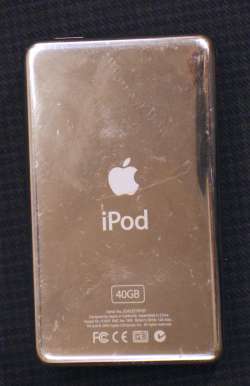 It is with great sadness that As A Dodo must report the passing away of Apple Computer's iTunes software, following a sudden and wholly unexpected assault by a gang of vested interests led by a rival digital media player application known as Spiralfrog.
iTunes was born on January 9, 2001 at MacWorld Expo San Francisco 2001, in a time when organising a record collection meant not filing your Lauryn Hill next to N'Sync and the best way to store tracks on a computer was to use its top as a CD rack. Starting off as a humble program, slaving away for hour after hour in the blinding glare of countless iMacs, iTunes was quick to see a means to escape. Soon, it found its way out onto the streets at the head of a pitiless gang of iPods, intent on making money by selling highly addictive "music" to young and old alike, meanwhile viciously wiping out any rival media players that dared to enter its 'Hood. Before long, children as young as five or six were finding themselves signing on as confirmed iTuners and spending hours on end "plugged in", their minds wasted by a diet of easily selectable tunes organised exactly as they wanted.
With iTunes' influence spreading wider and wider, it was perhaps inevitable that it would come under attack from rivals. Soon it was facing attacks from old-established gangs like the Walkmen and the Creatives, along with would-be "gangstas" like the Microsoft Zunes. Refusing to take to hiding, iTunes continued to be seen on the streets every day, right up to its final attack by the upstart Spiralfrog, apparently high on advertising revenue.
iTunes was buried in a simple white coffin, which will need to be replaced on a bi-yearly basis in order to remain compatible, or sooner if the fascia cracks.


